



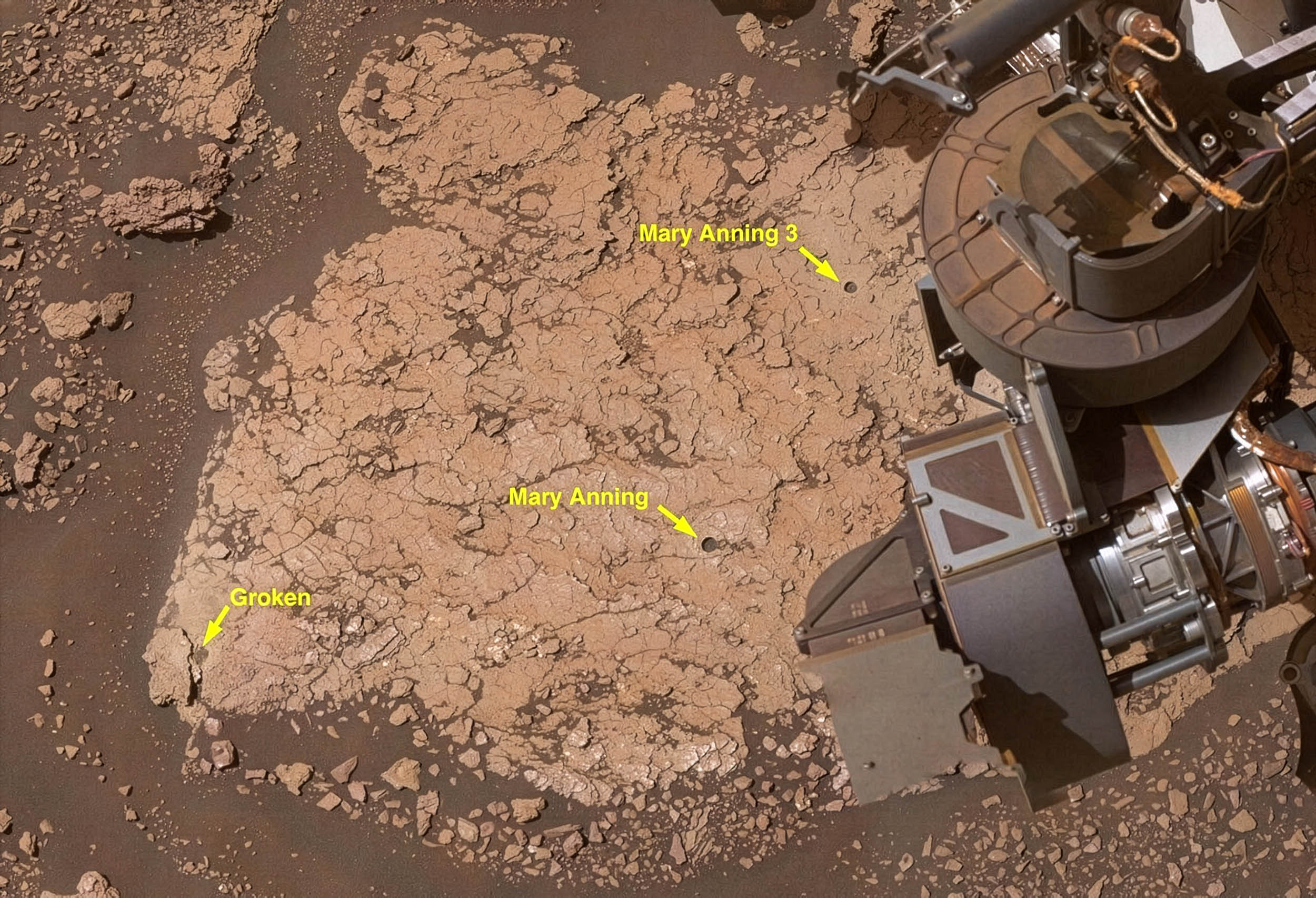
NASA’s Curiosity rover has discovered seven new carbon-based organic molecules on Mars, adding to evidence that the planet may have once had conditions suitable for life. These findings stem from a rock sample called “Mary Anning 3,” taken from clay-rich deposits at Mount Sharp, where water once flowed. The clay protects organic molecules from harsh Martian conditions, allowing for the preservation of potential signs of life despite severe radiation exposure over billions of years.
Among the new discoveries is a nitrogen heterocycle, linked to the formation of RNA and DNA, and benzothiophene, which contains both carbon and sulfur and has been found in meteorites. These findings suggest that Mars may have underlying chemical layers that have not yet been explored.
While the discovery does not confirm past life on Mars—since these molecules can arise from both biological and non-biological processes—it does indicate that ancient Mars had the necessary chemistry. The results are being used to prepare for future missions, including a next-generation laboratory planned for the European Space Agency’s Rosalind Franklin rover.
Source link
