



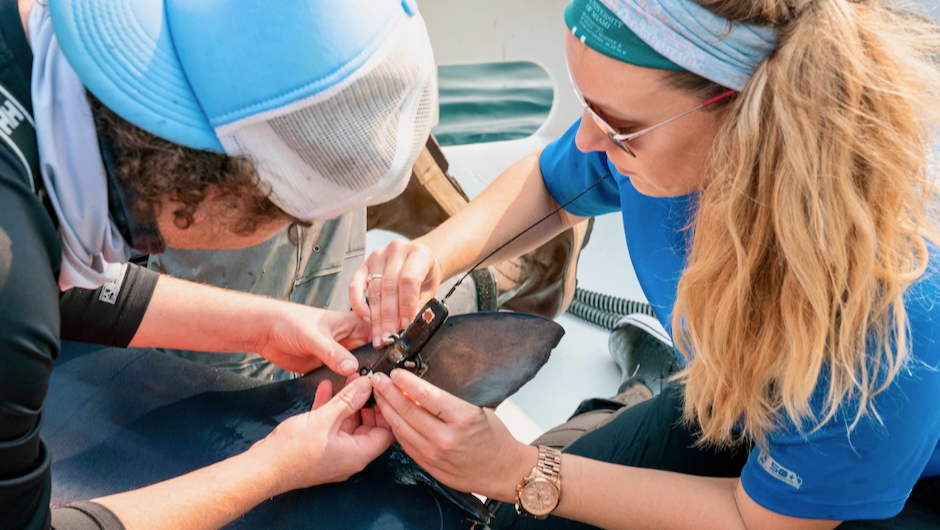
A recent study published in NPJ Climate and Atmospheric Science demonstrates that electronically tagged sharks can serve as mobile sensors to gather ocean weather data in hard-to-monitor regions. Led by Dr. Laura H. McDonnell at the University of Miami, the research shows that data from tagged sharks significantly improves the accuracy of ocean predictions, especially in the northwest Atlantic Ocean, with errors reduced by up to 40% in some areas.
This pioneering study integrates animal-derived sensor data into seasonal climate models, showcasing the potential for operational applications. The collaboration involved former shark scientist Neil Hammerschlag and atmospheric scientist Dr. Ben Cartman, who identified the utility of shark tagging data for climate modeling.
Using sophisticated satellite tags, the team tracked 18 blue sharks and one mako shark, collecting over 8,200 temperature and depth profiles from vast ocean depths. These data were then incorporated into the Community climate system model, showing improved forecasting, particularly in dynamic coastal areas vital for marine ecosystems and fisheries.
The researchers emphasized that animal-based sensors complement traditional observation methods rather than replace them. Accurate ocean forecasts are crucial for fisheries management and understanding climate change impacts on coastal communities. This study reveals the multifaceted utility of tracking marine animals beyond behavioral studies, underlining that even minor improvements in ocean forecasts can make a significant impact on resource management and planning.
This study, titled “Improved seasonal climate prediction using shark-borne sensor data in a dynamic ocean,” received support from Cisco Systems and the University of Miami.
Source link
