



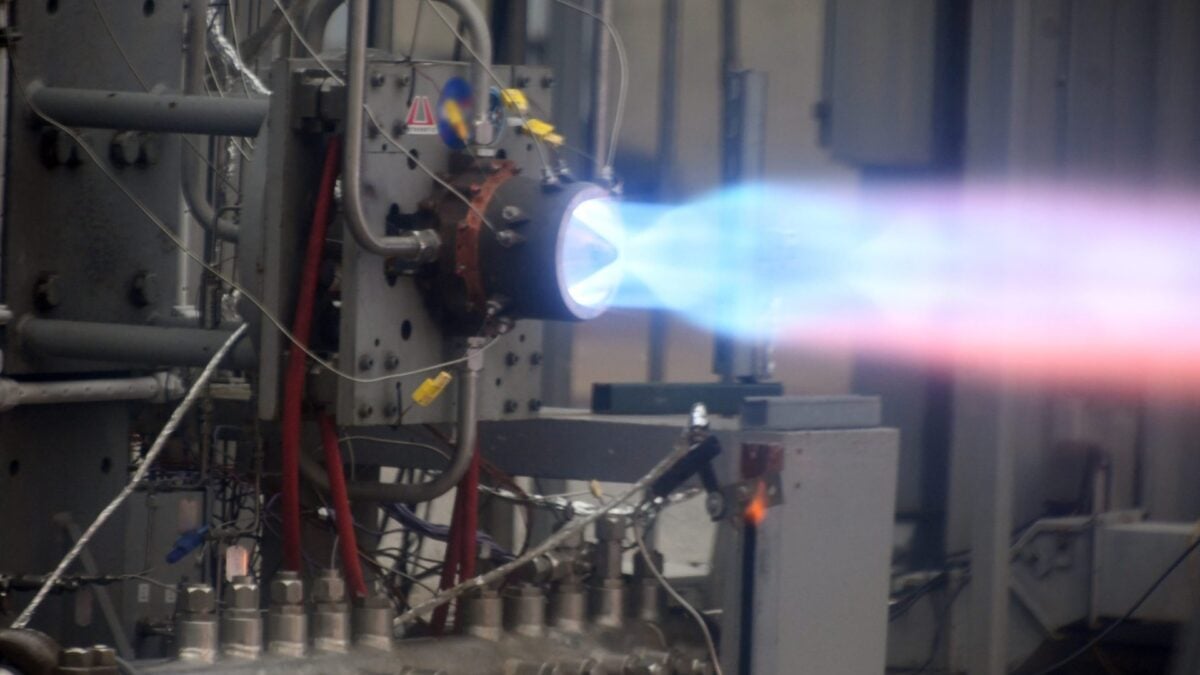
Astrobotic has successfully tested its rotating detonation rocket engine (RDRE), showing significant advancements in rocket propulsion technology. Conducted at NASA’s Marshall Space Flight Center, these tests involved two prototypes that generated over 4,000 pounds of thrust during a total of 470 seconds of operation, including a notable 300-second burn.
The RDRE technology utilizes a unique combustion process, creating thrust through a series of supersonic explosions within a circular channel instead of traditional exhaust ignition. This design not only makes the RDRE more compact but also allows for greater fuel efficiency.
Astrobotic’s engine, known as Chakram, was developed with NASA’s support and is a promising tool for future lunar missions, especially for NASA’s Commercial Lunar Payload Services program. Despite a previous unsuccessful lunar landing attempt in 2024 due to propulsion failure, the company plans to integrate the RDRE into upcoming lunar landers and other space missions.
Astrobotic’s recent tests have solidified its path towards innovative propulsion technology, with plans for future development and testing iterations. Other companies, including Venus Aerospace and NASA, are also exploring similar RDRE technologies, indicating a growing interest in this efficient propulsion method for space exploration.
Source link
