



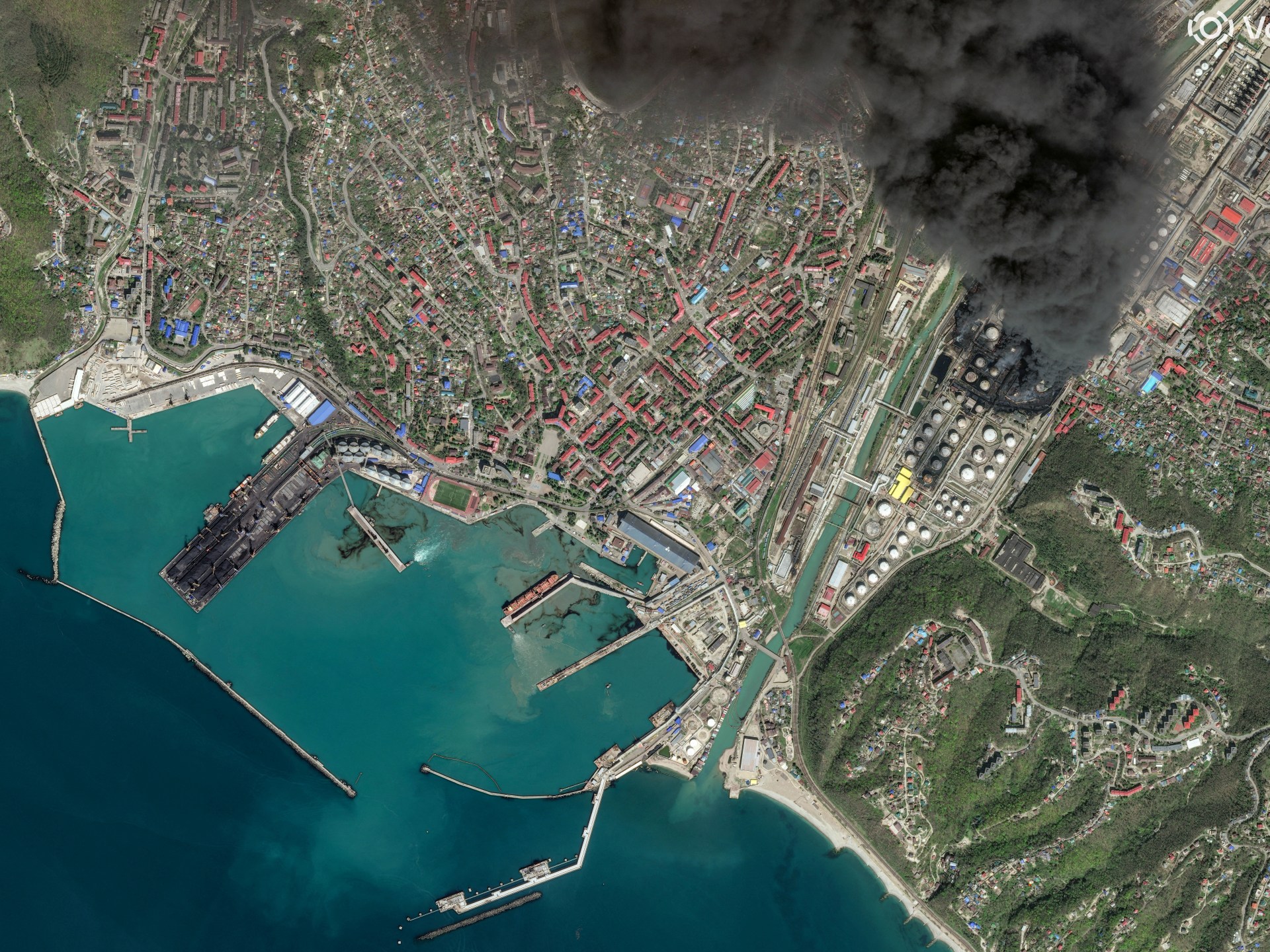
In March and April, Ukraine significantly impacted Russia’s oil revenues, depriving it of over $2.3 billion due to strategic long-range strikes on Russian ports and energy infrastructure, as oil prices soared above $100 a barrel. Ukraine’s intensified offensive came amidst the suspension of U.S. sanctions, which had been briefly lifted to stabilize global oil prices.
Reports indicated a marked decrease in Russia’s crude oil and refined product transshipments, prompting Russia to reduce oil production by approximately 300,000 to 400,000 barrels per day. Despite the U.S. sanctions exemption, Russia’s exports fell to their lowest levels since 2024, worsening in April.
Ukrainian forces continued to target critical Russian oil facilities, resulting in significant fires and operational shutdowns at refineries. Military intelligence highlighted regional recruitment efforts to defend against drone attacks as Russia’s ground operations faced difficulties.
Simultaneously, Ukraine has made strides in air defense, employing innovative drone technologies to counteract Shahed drones, while forming civil air defense initiatives involving private companies. President Zelensky announced international interest in Ukraine’s air defense capabilities, aligning with Gulf states for defense cooperation.
On the economic front, the European Union approved a substantial loan package to Ukraine amidst ongoing negotiations for EU accession, signaling a potential shift in Ukraine’s financial stability and military support. The EU’s new sanctions package aims to tighten loopholes restricting Russian energy sales, further straining Moscow’s economic resources amid the prolonged conflict.
Source link
