



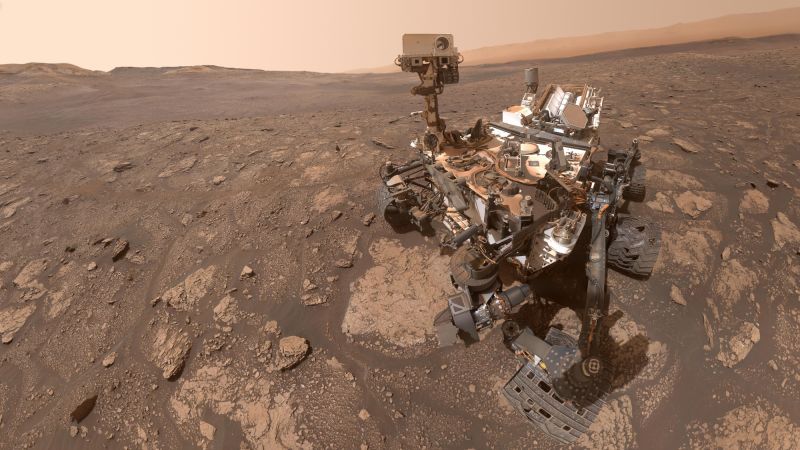
The Curiosity rover has made a groundbreaking discovery on Mars, identifying the most diverse array of organic molecules ever found on the planet, including seven types previously undetected. These carbon-based compounds are essential for life, similar to those on Earth, and have likely been preserved for 3.5 billion years. The findings, published in Nature Communications, suggest that Mars may have been a habitable environment in the past.
Curiosity used a chemical solution to analyze rock samples, revealing significant organic matter despite Mars’ harsh conditions. This complements earlier findings of organic compounds and indicates that Mars was potentially a livable planet billions of years ago. The study’s authors emphasized the need to analyze Martian rock samples on Earth to confirm the presence of ancient life.
The rover’s mission, which began in 2000, involved reaching clay-rich layers in Gale Crater to investigate the evidence of water that once flowed on Mars. Curiosity successfully drilled samples from a site named after paleontologist Mary Anning, using advanced instruments to identify complex organic molecules. These include nitrogen heterocycles, which could be precursors to genetic materials.
Scientists from the mission stress that while the presence of these organic compounds is significant, further evidence is needed to determine if they indicate past life. Future missions, including the European Space Agency’s ExoMars rover and NASA’s Dragonfly mission, are planned to continue searching for organic materials throughout the solar system.
A key takeaway from this research is the ongoing quest to return Martian samples to Earth, a step many scientists view as critical for understanding whether life ever existed on our neighboring planet. Despite setbacks in plans for sample return, researchers remain committed to resolving the question of extraterrestrial life.
