



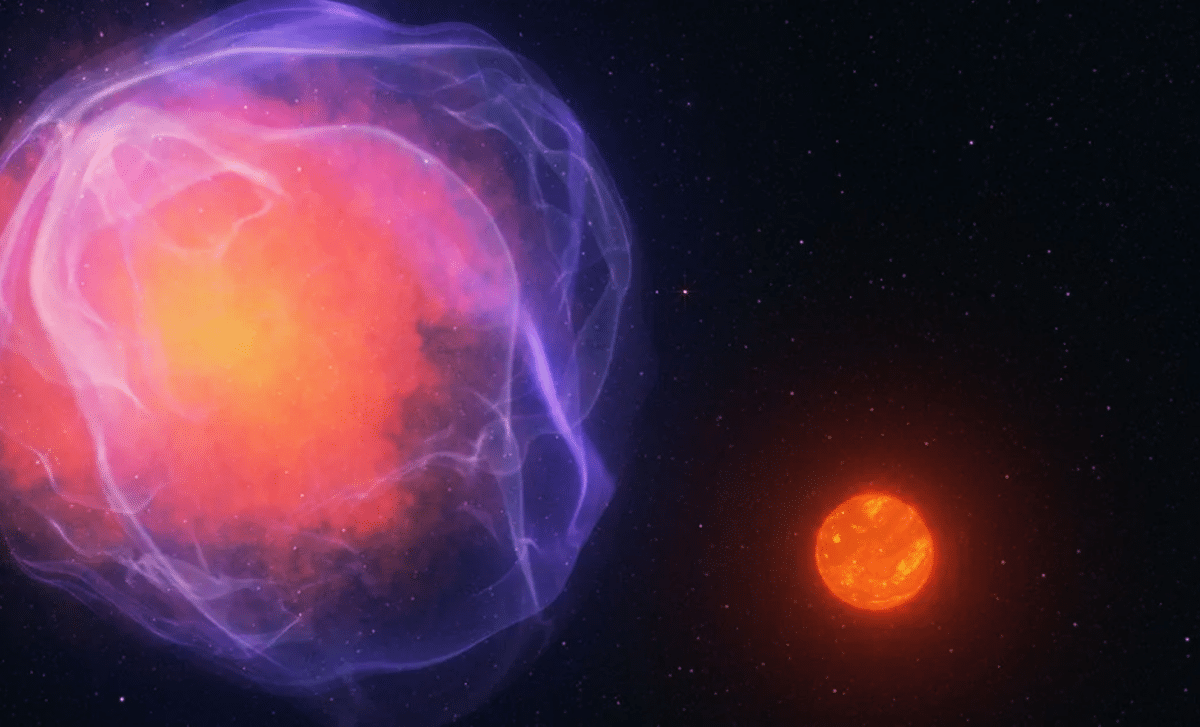
Citizen scientists involved in NASA’s Backyard Worlds: Planet 9 project have discovered an extraordinary object, CWISE J124909.08+362116.0, traveling at a remarkable speed of 1 million miles per hour, enabling it to escape the Milky Way’s gravitational pull. Published in the Astrophysical Journal Letters, this finding challenges traditional galactic dynamics, as most celestial bodies orbit at significantly lower speeds.
Key contributors to this discovery—Martin Kabatnik, Thomas P. Bickle, and Dan Casselden—analyzed WISE data and confirmed the object’s presence through further telescope observations. Kabatnik expressed immense excitement upon identifying its speed, marking a milestone in ultravelocity objects study.
CWISE J124909.08+362116.0 is difficult to classify; it may be a low-mass star or a brown dwarf—a type of celestial object that bridges the gap between planets and stars. Its unusual elemental composition, particularly low iron levels, suggests it originated from an earlier star generation, providing insights into stellar formation in the Milky Way.
This discovery underscores the significant role of citizen scientists in modern astronomy, demonstrating how the community can impact large-scale research with access to NASA resources. Volunteers have contributed to identifying over 4,000 brown dwarfs, highlighting the power of crowdsourced scientific endeavors.
Theories explaining the object’s high velocity include ejection from a binary system involving a supernova or from a globular cluster influenced by nearby black holes. Researchers aim to further investigate these hypotheses to understand its orbital dynamics and composition.
