



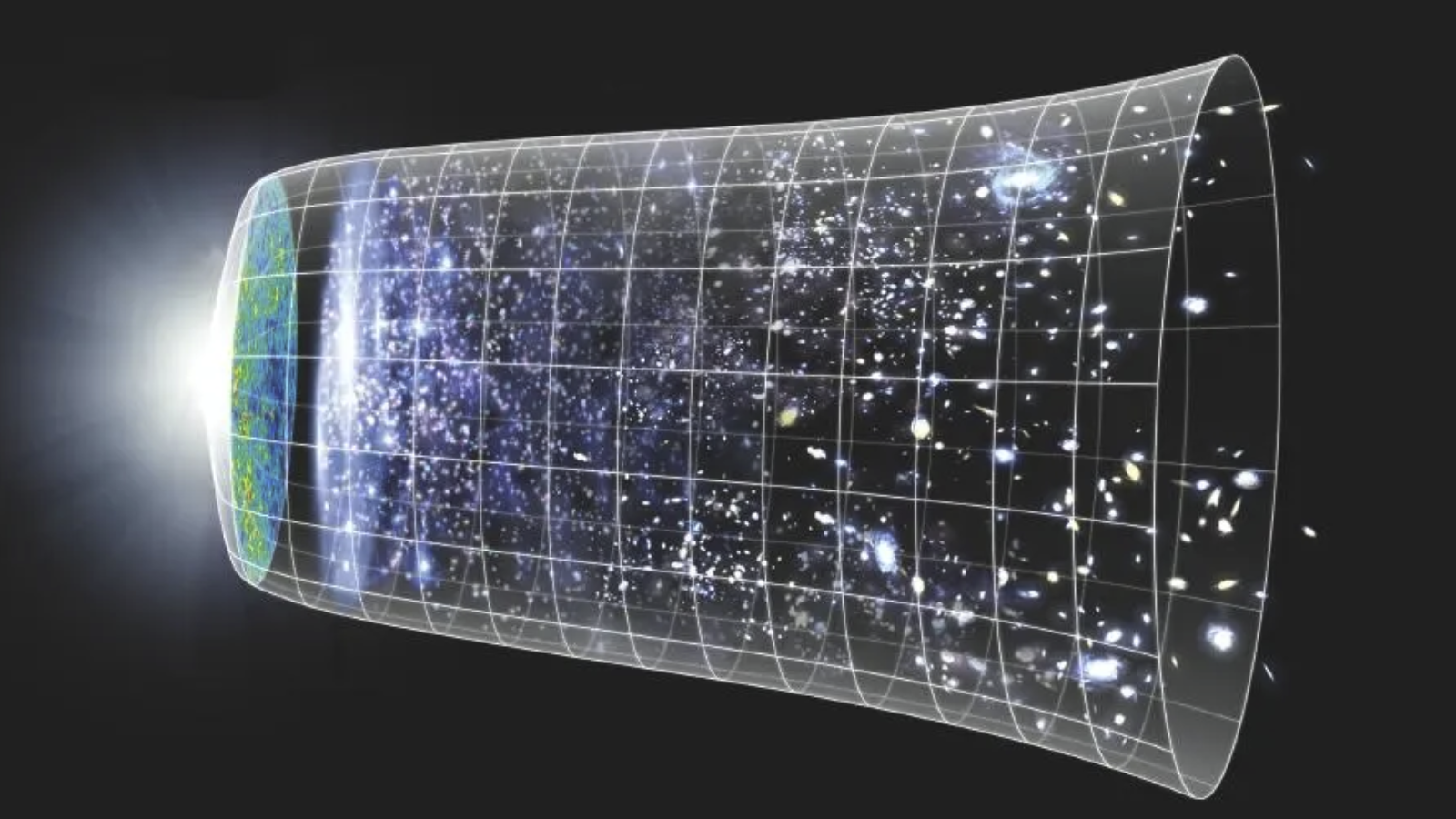
A team of scientists proposes that gravitational waves—tiny ripples in space-time—could be used to measure the rate of the universe’s expansion, potentially resolving the "Hubble tension," a notable discrepancy in calculating the Hubble constant from different cosmic measurements. Despite the known acceleration in the universe’s expansion due to dark energy, uncertainties persist regarding its overall expansion rate.
Traditionally, the Hubble constant is measured locally using type 1a supernovae, resulting in one value, while another method, based on the ancient universe and the Standard Model of cosmology, yields a different result. The new approach aims to deliver an independent measure of the Hubble constant through gravitational waves, a concept rooted in Einstein’s general relativity. Since the first detection of gravitational waves in 2015, advancements in observational technology have made these measurements increasingly feasible.
The researchers propose a "stochastic siren method," utilizing background gravitational waves from distant black hole collisions to estimate the universe’s age and composition. By comparing distances from gravitational wave events with electromagnetic radiation measurements, scientists can derive two Hubble constant values. If these match, it could help clarify uncertainties; if not, it suggests unresolved differences between the early and modern universe.
Initial findings indicate a higher value for the Hubble constant, pointing to a faster cosmic expansion rate. As gravitational wave detectors become more sensitive, this method could provide critical insights into cosmological parameters and potentially address the Hubble tension, with further results expected to be published in Physical Review Letters.
