



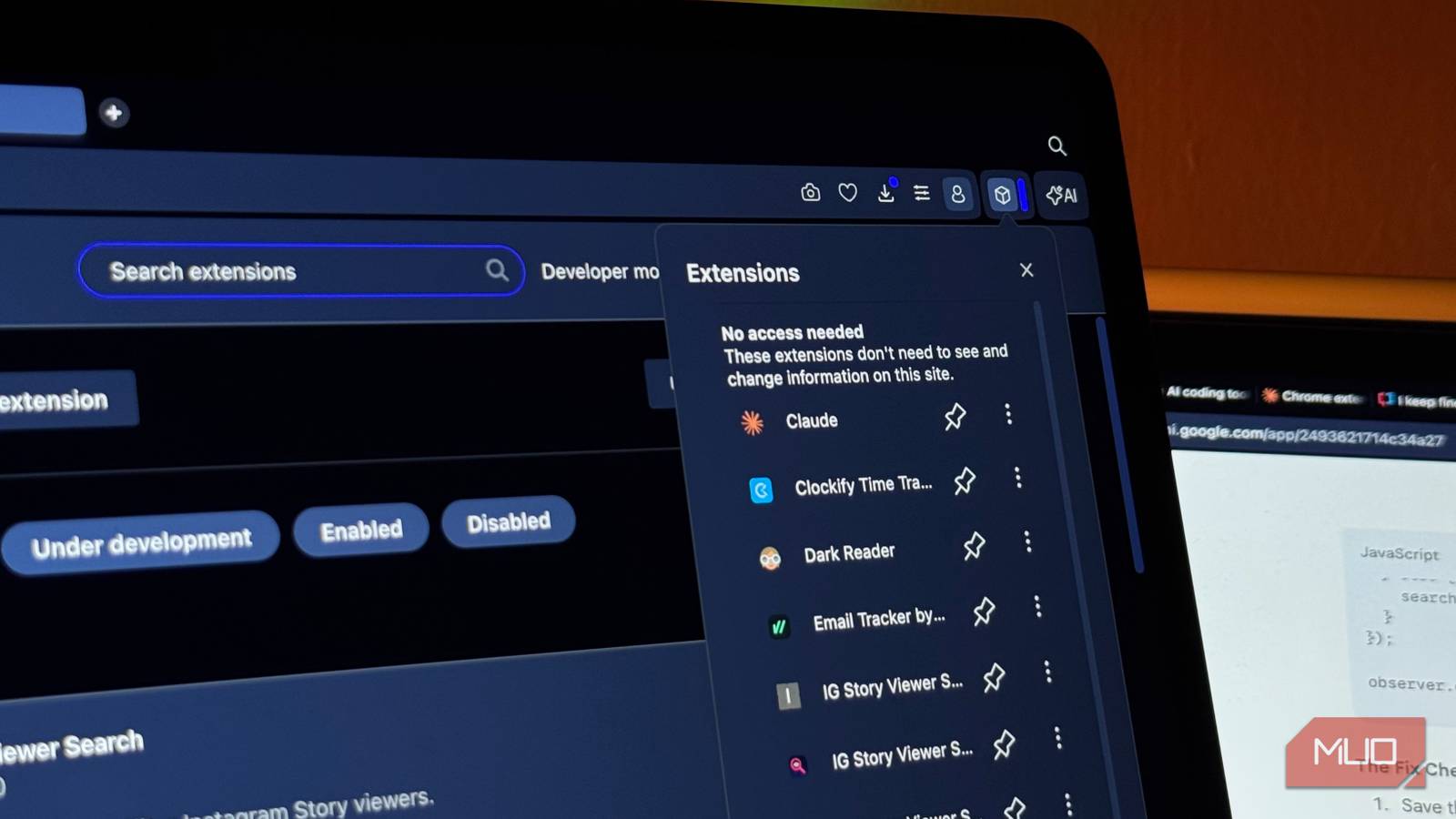
The article explores the concept of "vibe coding," focusing on creating a Chrome extension rather than conventional web apps or websites. The author reflects on their experiments with three large language models (LLMs): Claude, ChatGPT, and Gemini, to build a Chrome extension aimed at searching Instagram story viewers.
Key Points:
-
Vibe Coding Defined: The term often defaults to common web projects, but the author seeks to innovate beyond typical uses, leaning into the idea of coding as a creative expression.
-
Chrome Extension Testing: Chrome extensions are an ideal choice for quick testing with LLMs, as they don’t require backend services or complex deployment.
-
Extension Goals: The author aimed to create a simple tool that allows users to search their Instagram story viewers, addressing a common frustration.
- Experiment Outcomes:
- ChatGPT: Successfully built a basic extension but required multiple iterations to address issues with Instagram’s lazy loading. The final product was functional but still imperfect.
- Gemini: Struggled significantly, initially providing extensive but unhelpful guidance. Eventually, it produced an extension, but it failed to work properly after several adjustments.
- Claude: Performed best overall. It quickly adapted to Instagram’s internal API, yielding a functional extension in fewer interactions than the others. It allowed the user to search and filter story viewers effectively.
Conclusion:
The experiments revealed that Claude emerged as the most efficient LLM for this task, providing the least complicated path to a functional Chrome extension, while ChatGPT produced a workable version and Gemini fell short. The author concluded they would prefer to start with Claude in future projects, highlighting its effectiveness in vibe coding.
