



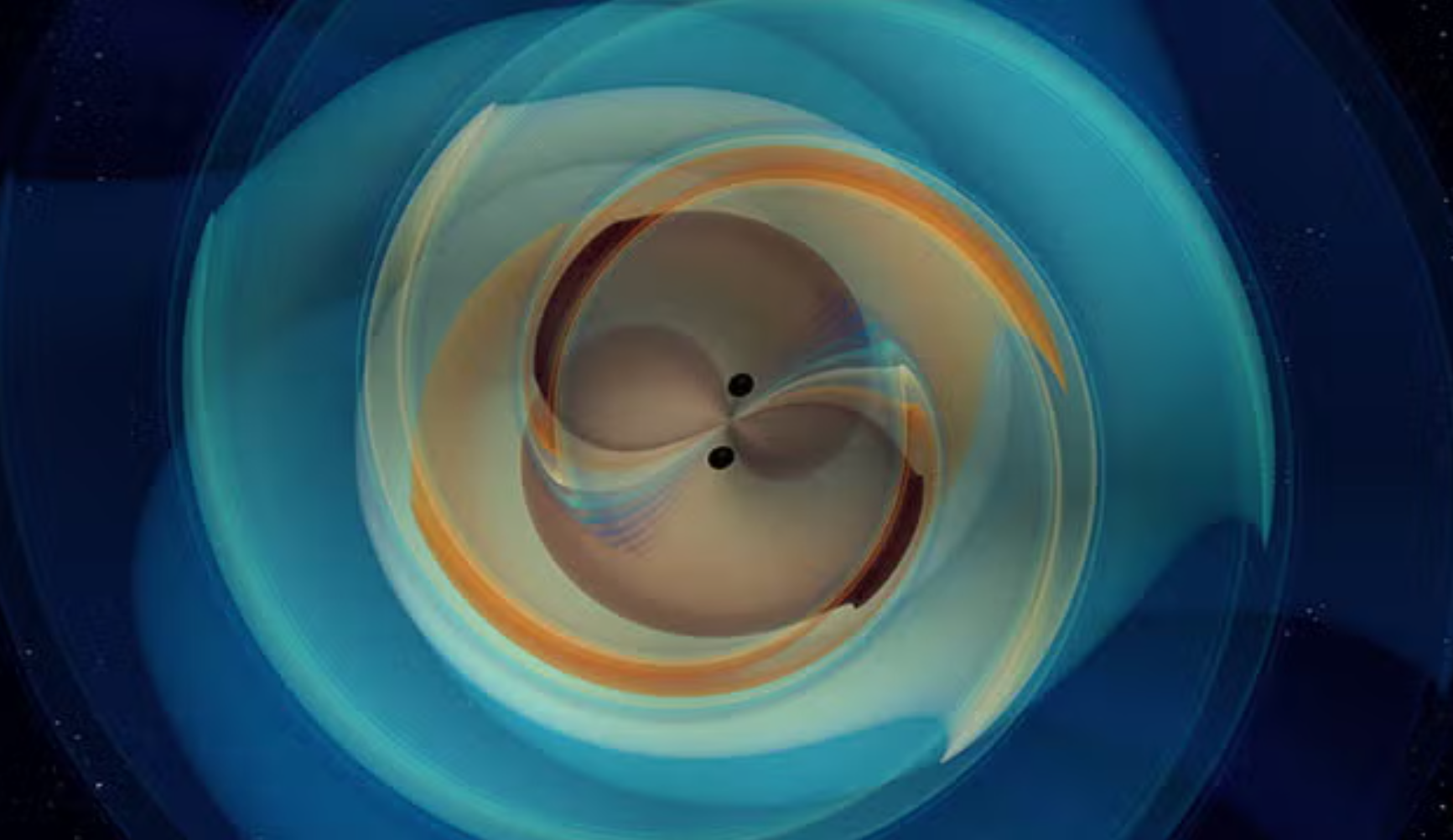
In May 2019, a unique gravitational wave signal known as GW190521 was detected by LIGO and Virgo, differing from typical signals associated with black hole mergers. It suggested the merger of two black holes—one approximately 85 solar masses and the other around 66—resulting in a remnant black hole of about 142 solar masses, marking the first observed intermediate-mass black hole.
A recent paper proposes a bold alternative explanation: GW190521 might originate from a wormhole connecting two black holes in another universe. The model suggests that the gravitational wave echo arrived on our side without the usual pre-merger buildup, potentially aligning with the characteristics of the detected signal.
The wormhole model presents a simplified scenario but does have limitations, such as omitting the black holes’ spin and not fully reconstructing the echo pattern. When compared with traditional models, the wormhole hypothesis shows promise but still favors the binary black hole merger explanation based on Bayesian analyses.
The unusual nature of GW190521 has fueled ongoing debate, opening doors to theories involving primordial black holes and cosmic phenomena. While the wormhole idea remains speculative, it challenges researchers to consider new frameworks in understanding gravitational waves. Future detector enhancements may enable clearer distinctions between conventional mergers and unexpected signals, refining how scientists approach these cosmic mysteries.
Source link
