



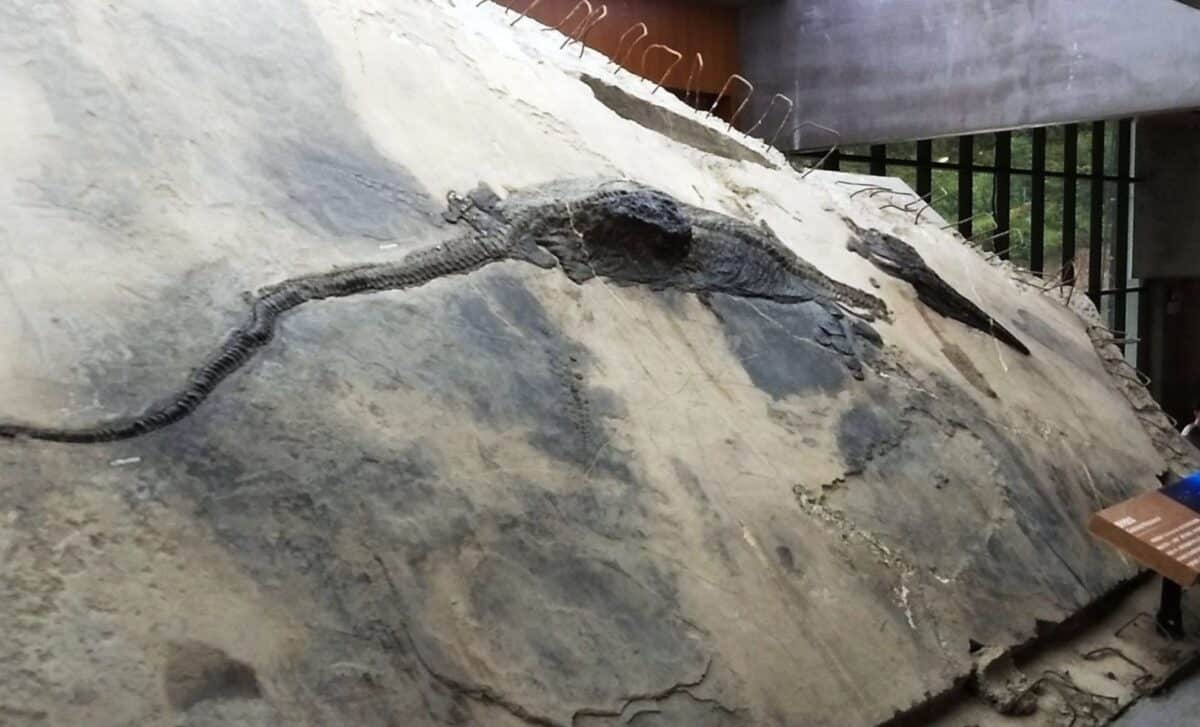
Scientists in China have made an extraordinary discovery of fossils revealing a prehistoric predator, the 5-meter-long Guizhou Ichthyosaurus, containing the carcass of a 4-meter-long marine reptile, Simpsaurus singiensis, in its stomach. This finding challenges previous assumptions that ichthyosaurs primarily targeted softer-bodied prey, suggesting they were dominant predators in ancient marine ecosystems.
The fossils, found in Guizhou province in 2010, indicate that ichthyosaurs, which emerged about 250 million years ago, played a significant role in megafaunal predation during the Triassic period—now the largest prey size documented in such fossils. Remarkably, the ichthyosaur had small, nail-like teeth, suggesting it likely used forceful techniques to capture and tear apart its prey, comparable to modern marine predators like killer whales.
Additionally, the presence of undigested remains implies the ichthyosaur died shortly after feeding, supporting the idea of active hunting rather than scavenging. This evidence enhances our understanding of the complexity of Triassic food webs and indicates that large-scale predation was more common than previously thought.
Source link
