



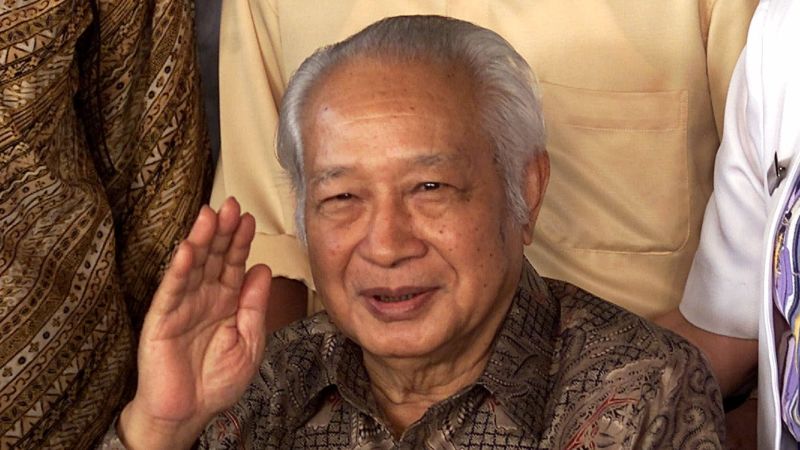
Former Indonesian President Suharto, long viewed as a U.S.-backed dictator responsible for mass killings during his regime, has been posthumously named a national hero by current Indonesian leader Prabowo Subianto, who is also Suharto’s former son-in-law. This decision has spurred protests from human rights groups and victims, who accuse it of glossing over a brutal history marked by the death of hundreds of thousands, particularly during the anti-communist purge following a 1965 coup attempt.
Suharto, who rose to power after Indonesia’s independence in 1949, oversaw a regime that has been criticized for significant human rights abuses, corruption, and the suppression of dissent. Official documents indicate U.S. involvement in the 1965 crackdown, underlining the international complicity in these events. While Suharto’s economic policies garnered some praise for stability and growth during his 31-year rule, he also faced backlash for embezzling state funds.
After being ousted in 1998 amid economic crisis, Suharto lived out his remaining years without facing trial, denying allegations of corruption or human rights abuses. His posthumous honor has reignited debates about his legacy, with many advocates for justice expressing outrage over the honor, while some of his family and supporters celebrate his contributions.
Protests against the accolade highlight deep divisions in Indonesian society regarding Suharto’s memory, with ongoing concerns over the potential rollback of democratic progress under Prabowo’s leadership.
Source link
