



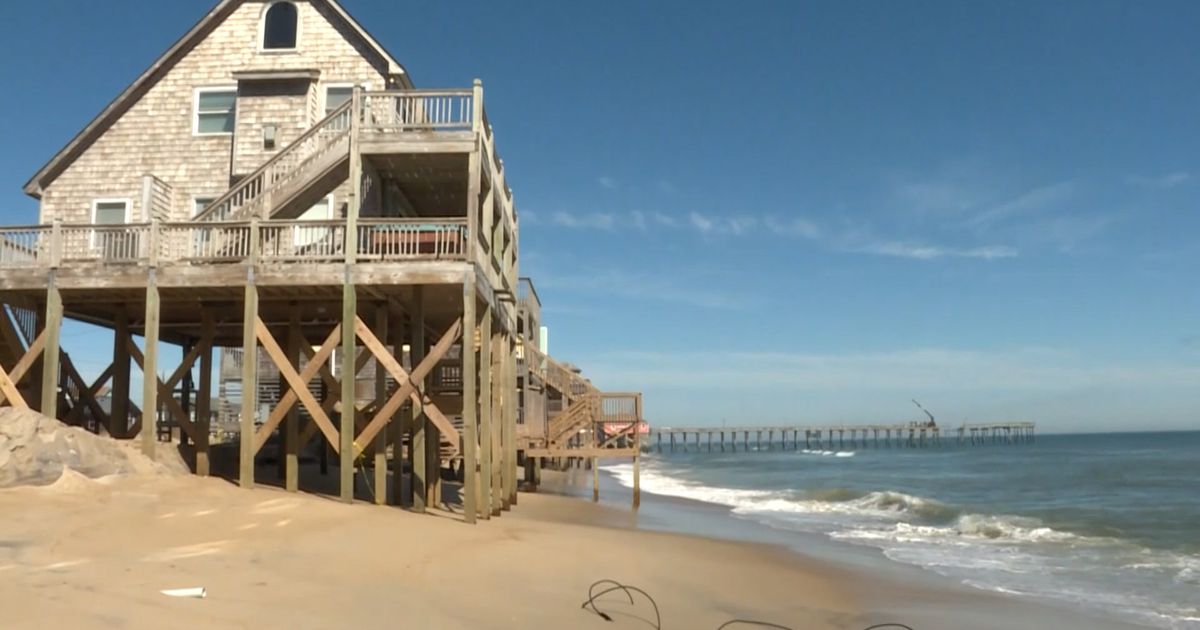
By 2050, over 2.5 million Americans, including tens of thousands on North Carolina’s coastline, may be at risk of severe coastal flooding, as revealed by a recent Climate Central analysis. Utilizing federal elevation and population data, the report maps areas susceptible to a 100-year flood event based on an intermediate climate scenario tied to the Paris Agreement, which is currently unfulfilled.
Kelly Van Baalen, project manager for Climate Central, emphasized that an estimated 1.4 million homes will exist within the 100-year flood risk zone by 2050. North Carolina ranks among the top 10 states for coastal flood exposure, with regions like Hyde County potentially seeing over 30% of residents living in flood-prone areas.
The risk is heightened in locations experiencing accelerated sea level rise, particularly densely populated coastal areas such as the Outer Banks, Morehead City, and Wilmington. The report notes that around 540,000 Americans over the age of 65 will reside in these at-risk areas by mid-century, representing 22% of the at-risk population despite being only 16% of the overall demographic surveyed. This older population may face heightened vulnerability due to mobility challenges and a higher likelihood of their wealth being tied to coastal properties.
Furthermore, the implications of rising sea levels extend beyond individual losses, potentially impacting state and national infrastructure, including ports and transportation, disrupting supply chains.
Climate Central’s interactive coastal risk finder allows users to assess flood risks by region and demographic. The organization encourages proactive measures for communities, such as raising homes, constructing sea walls, and restoring natural flood buffers. Van Baalen emphasized the importance of timely action, as current emissions will shape climate risks for the latter half of the century. Even homes not directly in flood zones will feel the impact through increased storm intensity and insurance costs. While the report doesn’t provide specific policy recommendations, it serves as a resource to empower residents and planners in making informed decisions for future preparedness.
Source link
