



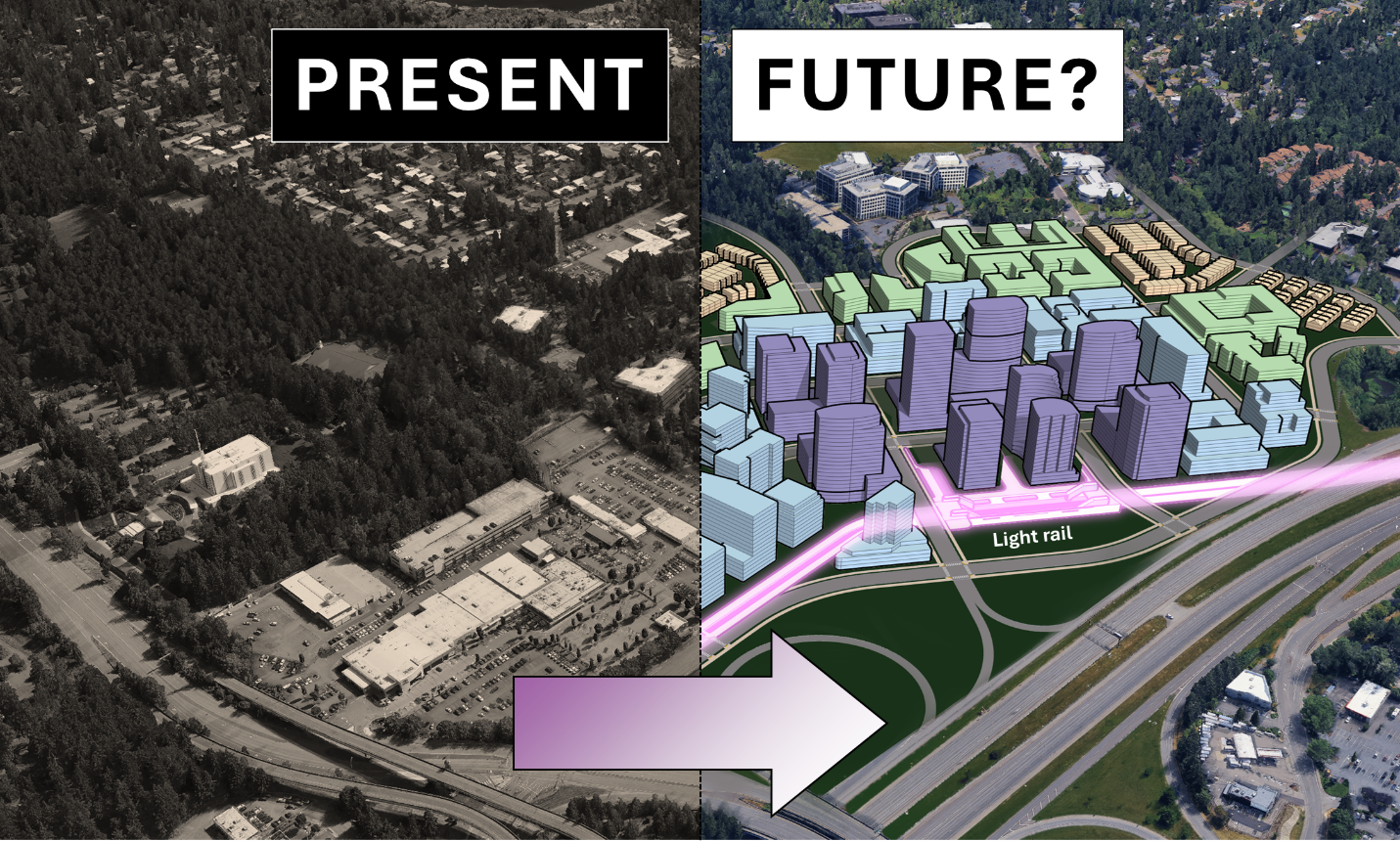
The article discusses plans for a light rail extension from South Kirkland to Issaquah, emphasizing the transformative potential this could have for the Eastgate area, previously an airfield. Despite budget shortfalls leading to proposals for cuts in funding, the author argues against this perspective, highlighting the importance of transit-oriented development (TOD) along the route.
Voters approved the link in 2016 as part of Sound Transit 3, with plans to begin around 2027 and expected service by 2041-2044. The proposed route includes four new stations and roughly 9 miles of new track, primarily in the I-90 median. Current land use in the area includes office parks and industrial sites, but with TOD, the region could evolve significantly over the next 20 years.
The article draws inspiration from the successful transformation of the Bel-Red area, which shifted from industrial use to a vibrant urban corridor thanks to thoughtful planning and zoning. The author believes similar strategies can be applied to Eastgate, emphasizing the need for improved road connectivity, increased density, and mixed-use zoning around light rail stations.
Key steps include establishing well-located stations, enhancing walkability with new local streets, and amending land use laws for mixed-use development. The area’s prime location near parks, Bellevue, and Seattle makes it ripe for significant change. With Bellevue updating its Eastgate subarea plan in 2026, the potential for urbanization along this corridor is considerable, and the author advocates for ambitious planning to realize this vision.
Source link
