



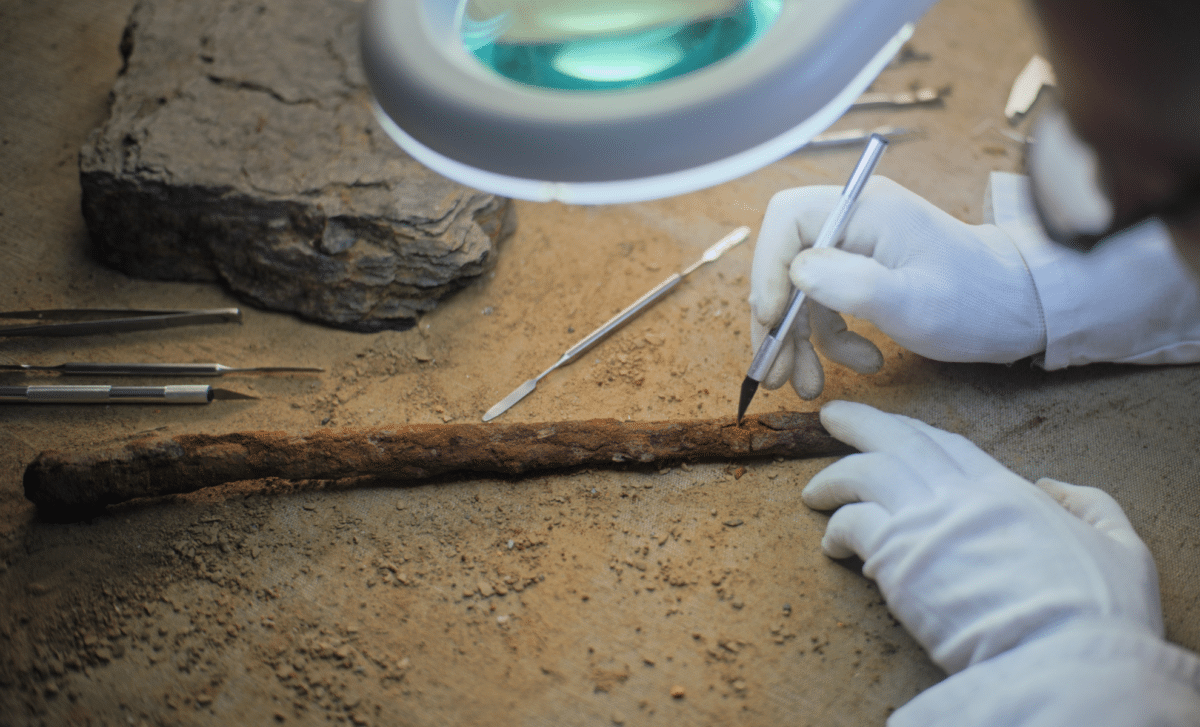
An international research team has uncovered 430,000-year-old wooden tools at the Marathusa 1 site in Greece, marking the earliest evidence of wood being used for functional purposes by humans, extending known history by at least 40,000 years. Two tools, made from alder and willow or poplar, were found, demonstrating early human craftsmanship and modification for specific uses. The preservation of these fragile wooden artifacts required exceptional conditions, underscoring the site’s importance.
This discovery offers insights into the Middle Pleistocene era, highlighting a time when early humans exhibited increasingly complex behaviors and technological advancements. The tools, indicating significant cognitive and practical developments, suggest uses such as digging and bark stripping, while also showing the challenges posed by large predators, like bears, in their environment.
The Marathusa 1 tools set a precedent as the oldest known wooden tools, outdating similar finds from regions like England and China. This discovery not only enriches the archaeological narrative of southeastern Europe but also emphasizes the site’s exceptional preservation conditions, which have allowed these artifacts to survive for millennia.
Source link
