



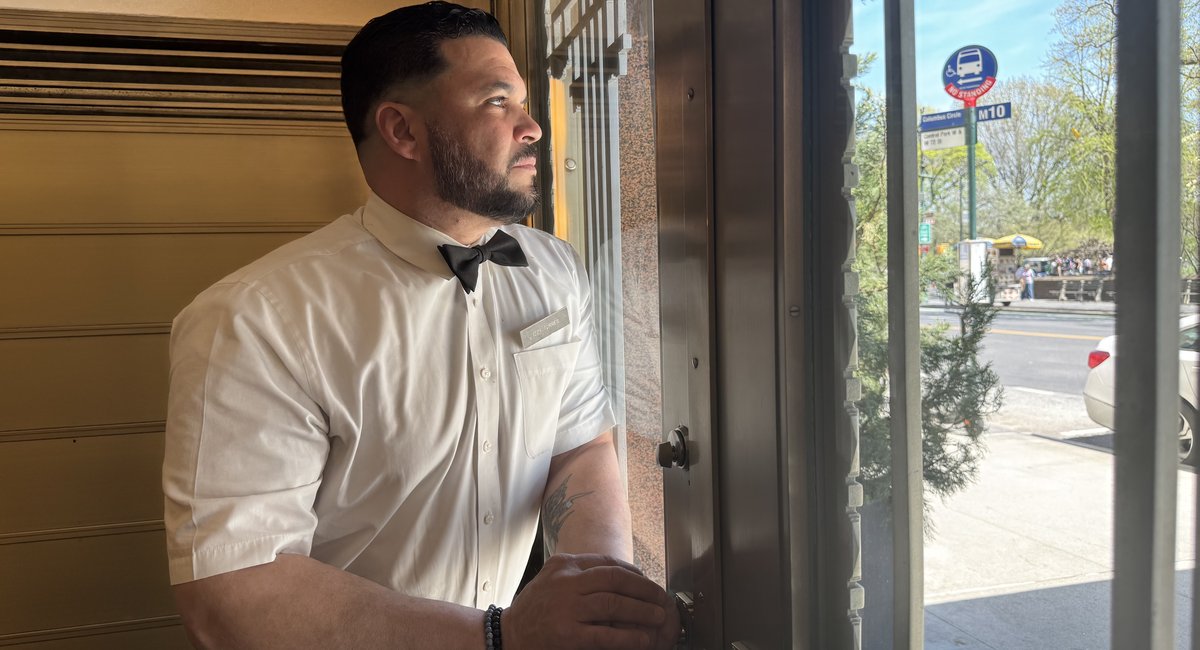
Israel Torres, a doorman in an upscale Upper West Side co-op since 1995, reports that his hourly wage remains approximately $30, which has the same purchasing power as his initial $13 wage due to inflation. At 52, Torres feels the impact of rising living costs and is cutting expenses. He, among 34,000 other service workers, could strike if current contract negotiations fail, marking the first construction worker strike since 1991. The union, 32BJ SEIU, aims for better wages, working conditions, and benefits amidst increasing living costs in New York City, supported by Democratic Socialist Mayor Zoran Mamdani.
The Labor Relations and Real Estate Advisory Board (RAB), representing building owners, seeks to impose health insurance costs on workers and introduce a lower-paid “Tier II” workforce for newly hired employees. RAB claims the industry faces sustainability challenges due to regulatory pressures and rising costs. Currently, unionized doormen earn around $62,000 annually; with benefits included, total compensation approaches $112,000. Union leaders emphasize that their negotiations center on economic security for workers.
Past negotiations saw splits over pay, and during strikes, residents often had to manage building needs themselves. In anticipation of potential strikes, residents are preparing to take on various tasks. The union also seeks to ensure workers’ safety regarding immigration enforcement interactions. Torres and fellow workers are actively organizing support amid ongoing negotiations.
Source link
