



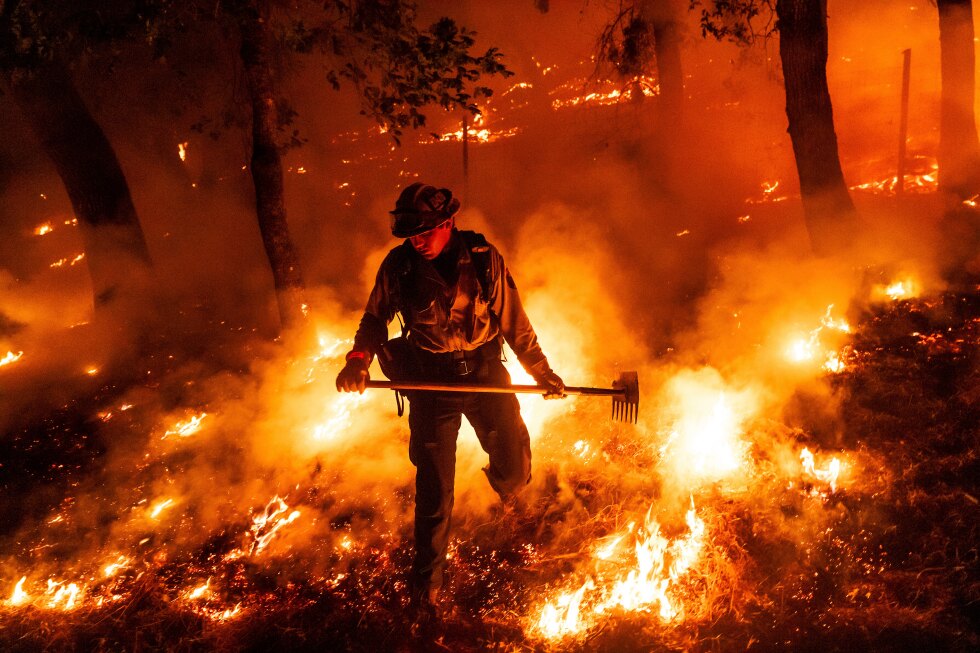
A recent study highlights that North America’s wildfires are experiencing longer burn times due to human-induced climate change, which is creating hotter and drier conditions. Historically, fires would often diminish at night as temperatures dropped and humidity increased, but this is becoming less common. The duration of wildfire-prone weather has increased by 36% over the past 50 years, with California seeing a rise of 550 hours and parts of New Mexico and Arizona experiencing an increase of 2,000 hours annually.
Researchers analyzed nearly 9,000 large fires from 2017 to 2023, revealing that warmer, drier nights now allow fires to continue burning longer, making them harder to combat. The number of days with fire-prone weather has increased by 44% over half a century. The study co-author, Xianli Wang, emphasizes that fires can now persist throughout the night due to elevated nighttime temperatures and insufficient humidity recovery.
The study indicates a broader trend of increasing wildfire activity across North America, correlating with ongoing climate change factors. Additional experts, not involved in the study, further confirm the significance of these findings regarding the escalating fire risks driven by climate conditions.
Source link
