



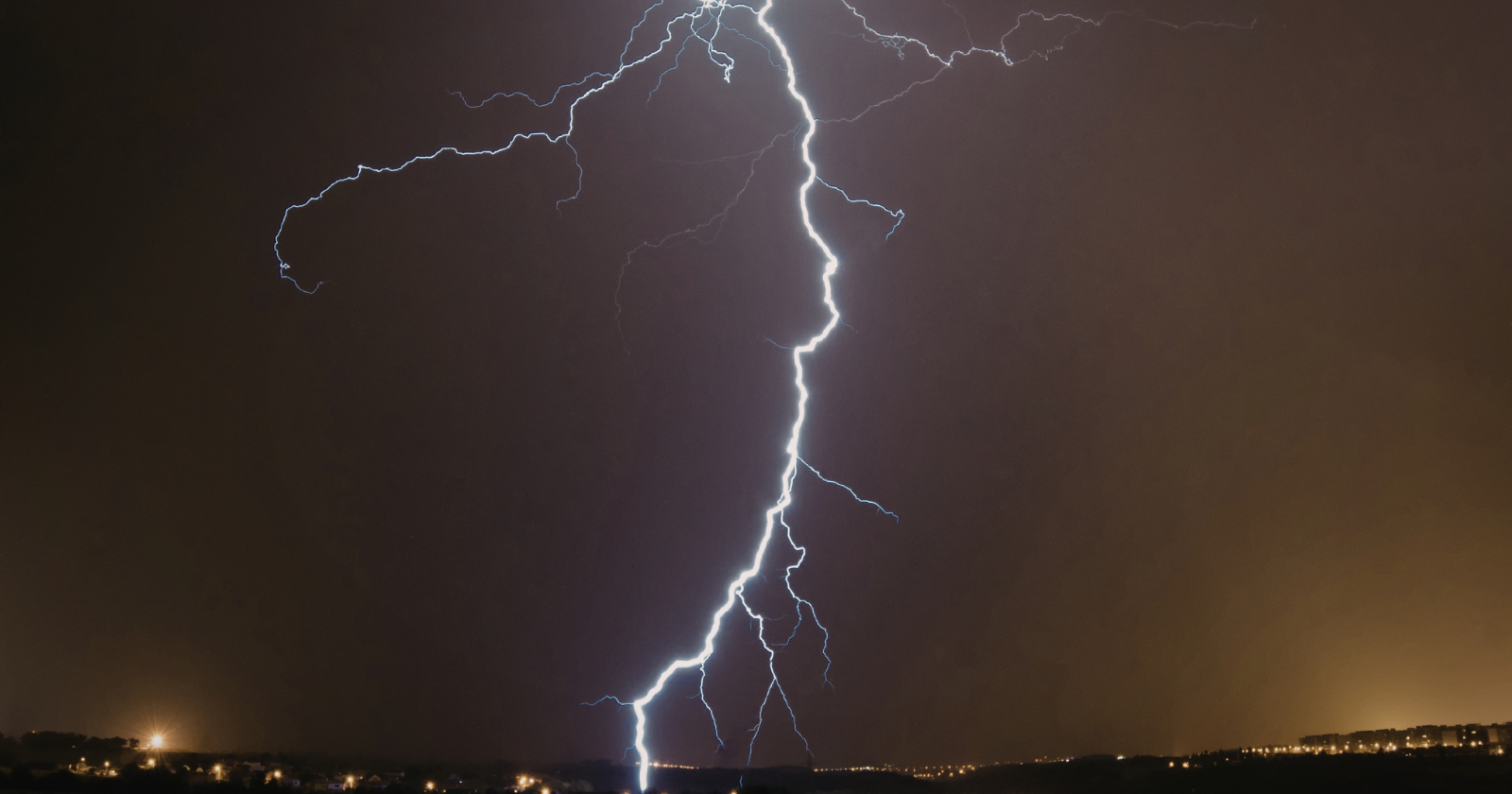
The National Oceanic and Atmospheric Administration (NOAA) estimates that lightning can reach temperatures of about 30,000 degrees Celsius, which is roughly five times hotter than the surface of the sun (5,500 degrees Celsius). However, while lightning is indeed hotter than the sun’s visible surface (the photosphere), it’s important to note that the sun’s outer corona can exceed 1 million degrees Celsius, and its core temperature is around 15 million degrees. Thus, lightning is hotter but not hotter than the sun overall.
The confusion often arises from equating temperature with energy. While lightning reaches extreme temperatures for a fleeting moment in a narrow channel, the sun radiates far more energy over time, with its vast size and continuous fusion reactions. Lightning, though extremely hot, is a short-lived phenomenon and delivers significantly less energy than the sun.
Temperature measurement in lightning is derived from the light emitted by its channels, using the spectrum of light to infer temperature, similar to how astronomers assess stellar temperatures.
In summary, while lightning indeed surpasses the sun’s surface temperature momentarily, it is a small, brief event that pales in terms of overall energy compared to the sun.
Source link
