



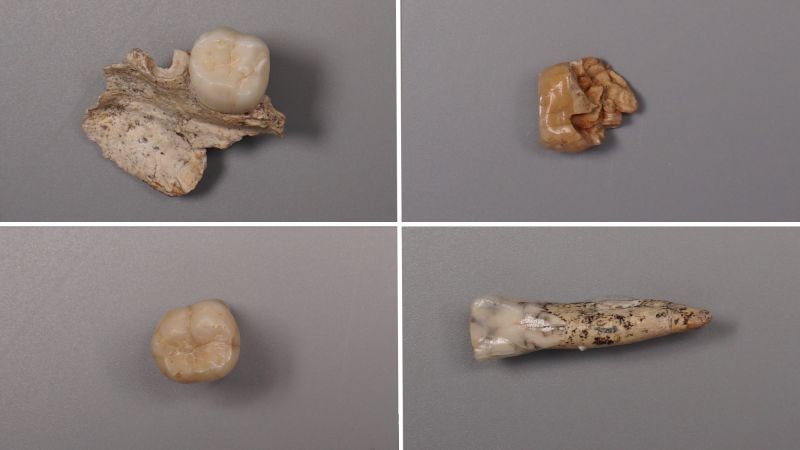
A recent study has shed light on the evolutionary lineage of Homo erectus, using ancient proteins extracted from six teeth found in China. This marks a significant breakthrough as the genetic material from Homo erectus has been scarce, making it difficult to comprehend its relationship to later human species, including Homo sapiens.
The research, led by Chinese geneticist Fu Chaomei, analyzed enamel proteins rather than DNA, as proteins are more resilient over time. The teeth, approximately 400,000 years old, shared two amino acid mutations, suggesting they belonged to the same species and hinting at interbreeding between Homo erectus and Denisovans—another ancient human species.
This interbreeding likely contributed to the genetic makeup of some modern humans today. The study strengthens the idea that early human evolution in Asia involved overlapping populations rather than isolated branches. Researchers could also determine the sex of the fossils, identifying five males and one female.
While the findings present a fresh perspective on human ancestry, questions remain. Some experts urge caution, noting gaps in the timeline between Homo erectus and Denisovans, suggesting alternative evolutionary links. More research is needed to clarify these relationships and deepen our understanding of human origins.
