



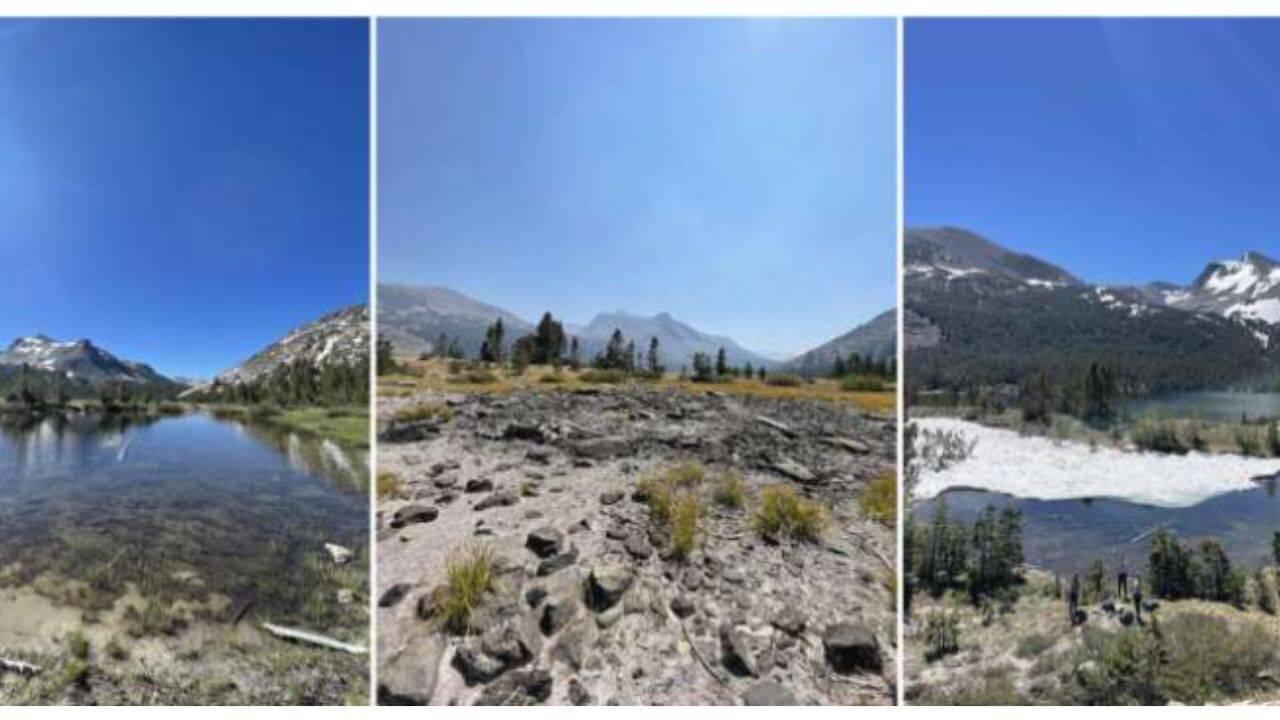
A recent study, detailed in the journal Ecosphere, examines the dynamic nature of mountain ponds in California’s Sierra Nevada, highlighting the significant role of winter snowfall on their summer conditions. Researchers Christine Bonadonna and Mary Jade Faragia studied 30 ponds over four summers, including both drought years and those with heavy snowfall.
Key findings include:
-
Temperature Variability: These ponds exhibit extreme daily temperature fluctuations, with changes exceeding 36°F (20°C), primarily influenced by winter snowpack rather than summer weather.
-
Snow’s Impact on Ponds: In years with abundant snowfall, ponds are larger, colder, and nutrient levels are lower. Conversely, less snowfall results in smaller, warmer ponds with higher nutrient concentrations, affecting the ecosystem and increasing zooplankton populations.
-
Daily Water Mixing: The study revealed a unique nightly mixing of pond water due to temperature drops, which contributes to the observed temperature variations.
- Climate Change Concerns: Predictions indicate a potential loss of up to 70% of snowpack by the century’s end, likely leading to warmer, nutritionally richer ponds, which may alter the ecosystems dependent on these habitats.
The researchers emphasize the ecological importance of these ponds, advocating for more studies to understand the effects of changing climate conditions on these ecosystems.
