



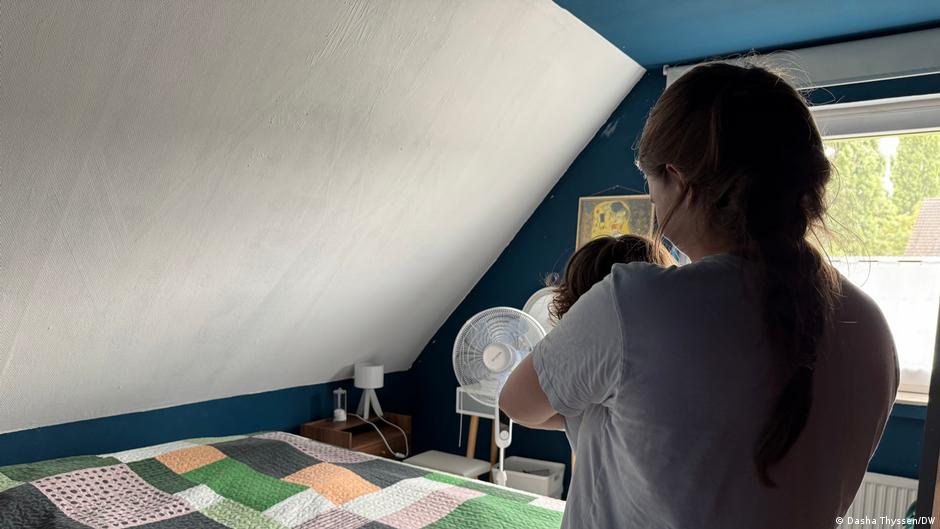
Darya’s vacation in Türkiye was overshadowed by the heatwave upon her return to Bochum, Germany, where her apartment reached 31°C (87.8°F), even hotter than the Turkish beach. Living in a southern-facing attic with no air conditioning or external blinds, Darya struggles to keep cool despite using a fan and blackout curtains.
June 2026 marked a record high for heat in Western Europe, with Germany reporting over 5,120 heat-related deaths, significantly more than the previous year’s total. Experts emphasize that housing insulation needs to prioritize protection against both cold and extreme heat, particularly as over half of Germans live in rented homes with inadequate summer cooling measures codified by law.
Current German tenancy laws ensure minimum heating standards but lack equivalent protections for cooling. Buildings primarily constructed before 1990 often don’t meet modern insulation requirements, leaving tenants vulnerable to overheating without legal recourse. Experts suggest that both government and landlords need to adopt better design practices and financial support for climate adaptation.
As heatwaves worsen, temporary solutions such as staying in hotels with air conditioning have become popular, although this is not sustainable long-term. Darya particularly worries about the impact of extreme heat on her young daughter, highlighting the urgent need for effective strategies to protect public health and well-being.
Source link
