



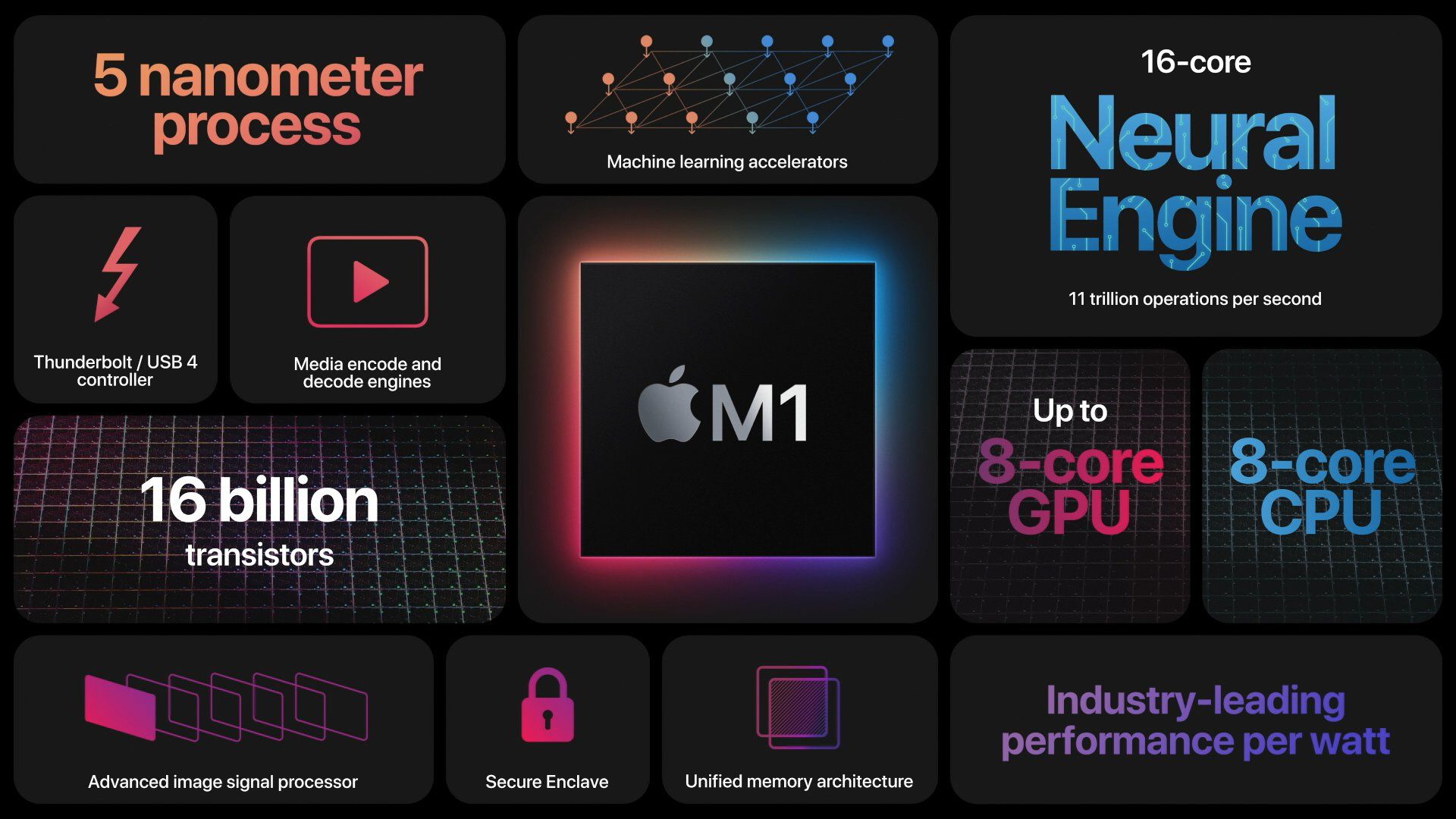
Today marks the fifth anniversary of Apple’s transition from Intel to its own silicon chips in the Mac lineup, starting with the M1 chip announced on November 10, 2020. The M1, featured in devices like the MacBook Air and 13-inch MacBook Pro, was notable for its impressive performance, including being called the "world’s fastest CPU core" at launch.
Since then, Apple has released five generations of chips, with the latest, the M5, announced last month. Comparing M1 to M5, performance improvements include:
- CPU/GPU: 6x faster
- AI: 6x faster
- AI video processing: 7.7x faster
- 3D rendering: 6.8x faster
- Gaming: 2.6x faster
- Code compilation: 2.1x faster
Geekbench scores:
- M1: Single Core – 2,320; Multi Core – 8,175
- M5: Single Core – 4,263; Multi Core – 17,862
Manufactured on different processes from TSMC, the M1 uses a 5nm process while the M5 utilizes a 3nm process. The M5 has notable upgrades, including more cores and enhanced features like hardware-accelerated ray tracing.
As of June 2023, all Macs have transitioned to Apple chips, phasing out Intel entirely, and support for Intel software is nearing its end. Future advancements are anticipated, including a 2nm chip expected by 2026, promising further performance and power efficiency improvements.
