



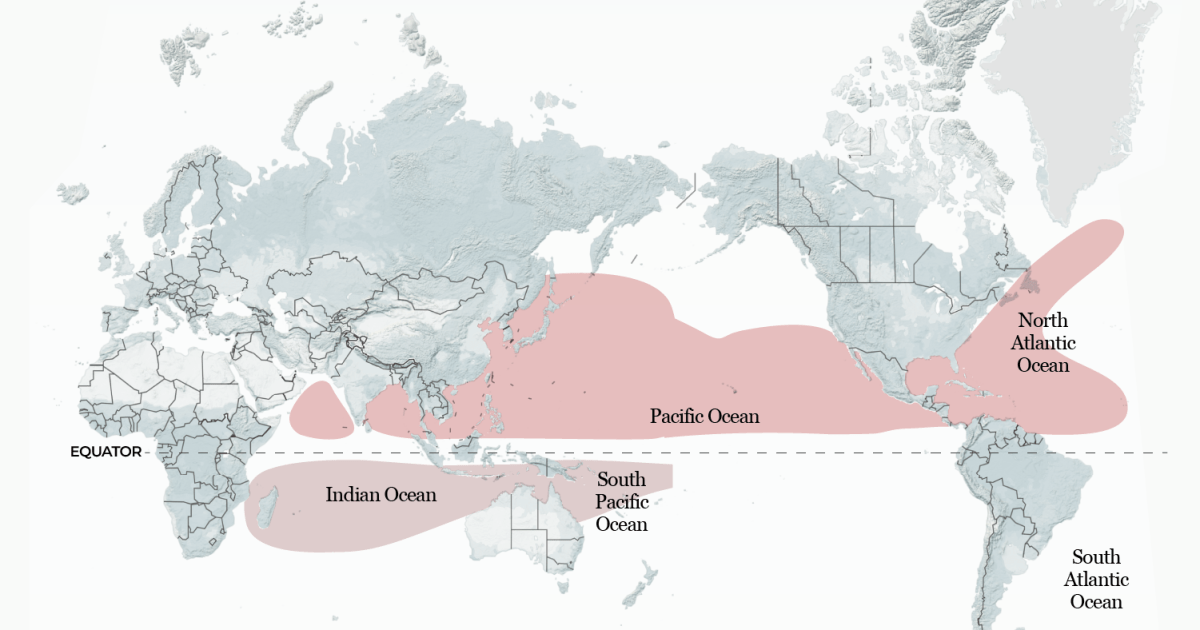
The Atlantic hurricane season runs from June 1 to November 30, peaking in mid-September, with warm ocean waters contributing to the formation of tropical storms and hurricanes. This year, the National Oceanic and Atmospheric Administration (NOAA) predicts a milder season due to the El Niño phenomenon, with a 55% chance of below-normal activity.
El Niño occurs when sea surface temperatures rise in the central and eastern Pacific Ocean, disrupting global weather patterns and suppressing Atlantic hurricane activity while increasing storms in the Pacific. Conversely, La Niña—with cooler Pacific temperatures—boosts Atlantic hurricane strength.
Tropical cyclones form over warm equatorial waters, creating low pressure as warm air rises. When wind speeds reach 63 km/h (39 mph), they are classified as tropical cyclones, becoming hurricanes at 119 km/h (74 mph). Hurricanes, cyclones, and typhoons are essentially the same, distinguished only by their origin.
El Niño’s impacts vary globally. In the North Atlantic, it typically leads to a 60% reduction in hurricane activity. Meanwhile, regions like Hawaii may see increased storm occurrences post-El Niño, while Australia experiences fewer storms.
Storm naming began for clarity in warnings, evolving from arbitrary names to an alphabetical system managed by the World Meteorological Organization, rotating every six years.
Overall, while the forecast is milder this year, experts caution the unpredictability of storms, emphasizing the need for preparedness in hurricane-prone areas.
Source link
