



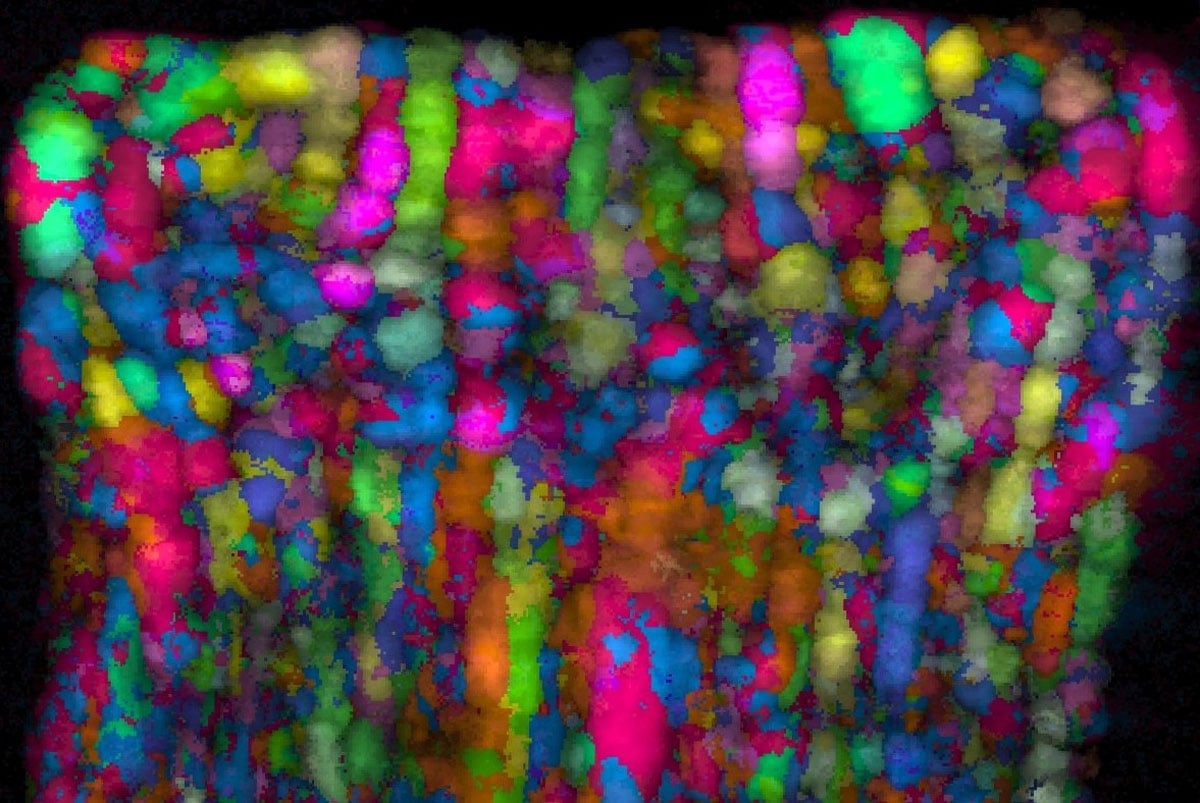
Researchers at Purdue University have developed cobalt aluminum (CoAl) nanolaminates that break the trade-off between strength and flexibility, making them up to ten times stronger than structural steel without being brittle. This advancement is significant for applications in jet engines, where materials must endure extreme heat and stress.
Conventional intermetallic compounds like CoAl are strong but often too brittle to deform, leading to failures in aerospace applications. To address this, the team introduced microscopic defects called dislocations into the CoAl structure and created flexible amorphous interfaces during manufacturing. This approach allowed the material to exhibit significant plasticity at room temperature while maintaining its strength.
The resulting nanolaminates reported a yield strength of over 6 GPa and could sustain a 15% plastic strain without breaking. This innovative material is produced using magnetron sputtering deposition, allowing for precise control over its properties.
Future research will focus on scaling these nanocomposites for industrial use and testing similar techniques with other intermetallic compounds, potentially revolutionizing material design in high-performance aerospace, energy, and defense applications.
Source link
