



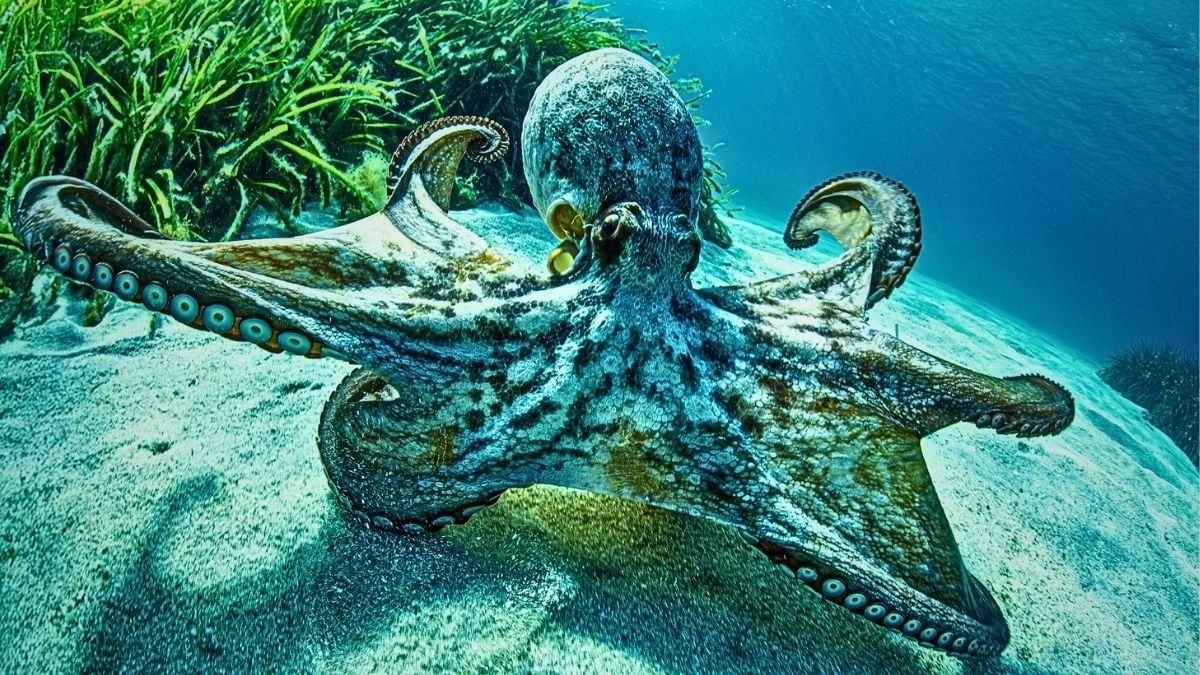
Biologists have long considered the social brain hypothesis, suggesting that larger brain sizes relative to body size are tied to social species. This idea holds true for many animals, including primates, whales, and carnivorous herds. However, newly published research highlights cephalopods—like octopuses and squids—as exceptions, showcasing large brains despite often being solitary and hostile.
The study introduces the cultural brain hypothesis, proposing that brain size may also be driven by the capacity to acquire and manage information, rather than solely by social structures. Researchers, including anthropologist Kiran Basava and economic psychologist Michael Muthukrishna, compiled data from 79 cephalopod species and found that ecological factors, not sociality, were significant determinants of brain size.
Cephalopods in complex habitats, such as shallow waters, exhibited larger brains. This contradicts the notion that social behavior directly correlates with brain size; for example, not all social cephalopods had larger brains. The new findings prompt a reevaluation of evolutionary paths to intelligence, suggesting that rich environments can foster brain growth in solitary species.
Overall, the study emphasizes the need to question established scientific dogma, illustrating that there are multiple drivers behind the evolution of brain size in different species.
Source link
