



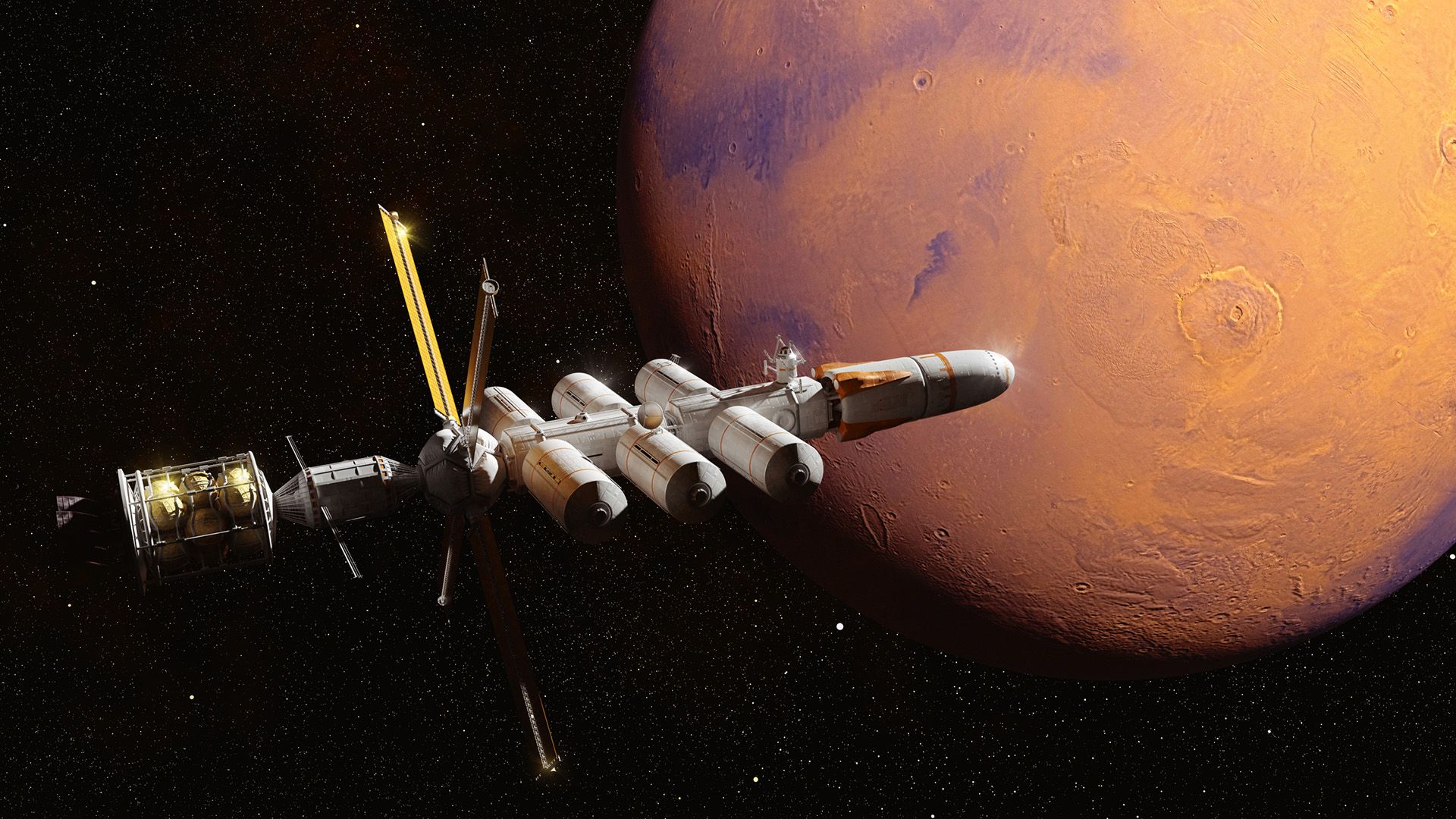
A recent study indicates that astronauts may complete a round trip to Mars in about a year, potentially halving the current mission duration. Currently, missions to Mars take approximately 7 to 10 months each way and require nearly three years to synchronize for a return trip due to orbital cycles. The study, published in Acta Astronautica, draws on earlier estimates of near-Earth asteroid orbits, specifically highlighting asteroid 2001 CA21, which suggested a faster path between Earth and Mars.
Research by Marcelo de Oliveira Sousa from Brazil’s Northern Rio de Janeiro State University found that a spacecraft could theoretically reach Mars in approximately 34 days if it followed a similar trajectory to the asteroid’s initial orbit; however, this would require speeds far beyond current rocket capabilities.
By applying geometric analysis of asteroid paths, Souza identified a feasible opportunity for a round trip during the 2031 Mars opposition, suggesting a 153-day mission with specific launch windows. This scenario involves traveling to Mars in 33 days, spending 30 days on the surface, and returning in about 90 days. There are also lower energy options that could shorten the duration to about 226 days.
While promising, these high-speed concepts remain theoretical and depend on advancements in spacecraft design and propulsion. Nonetheless, the study highlights a new perspective on optimizing Mars travel, potentially paving the way for future missions using advanced rockets like SpaceX’s Starship.
