



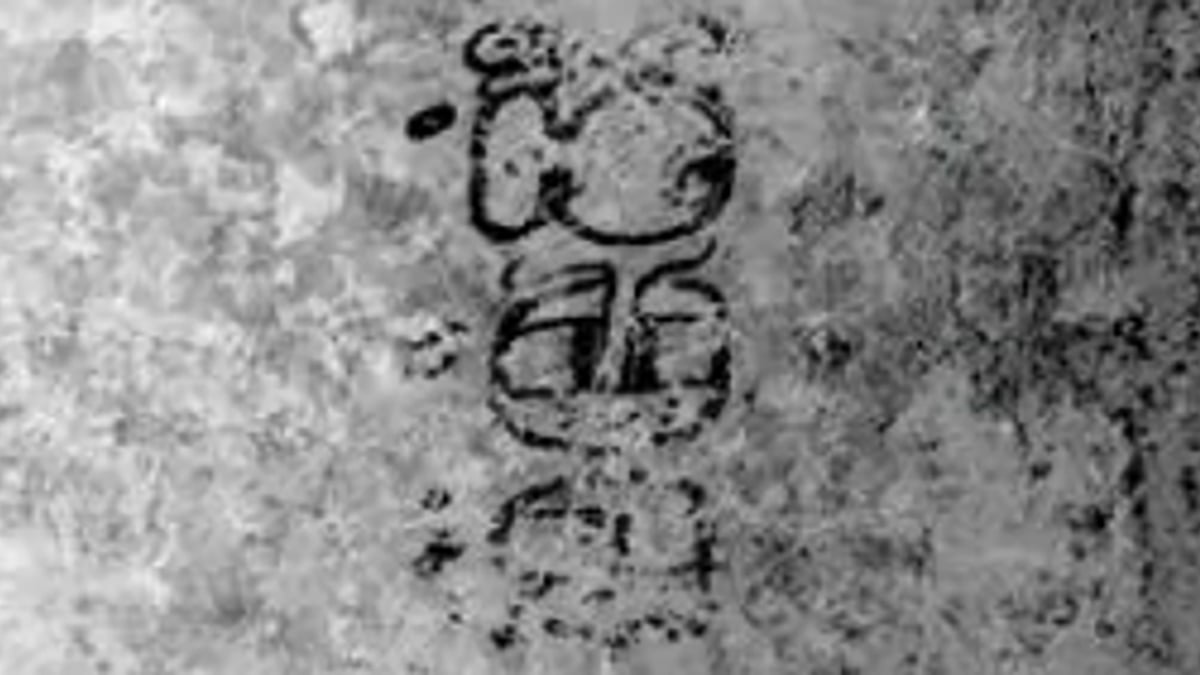
The classical Mayan period (250-900 AD) is viewed as a golden age marked by significant advancements in architecture, art, writing, mathematics, and astronomy. Recently, American researchers identified an individual, Sak Tahn Waax (translated as "white-breasted fox"), as a notable mathematician and astronomer from this era. His name appeared alongside impressive mathematical formulas found in over 50 "microtexts" at the Xultun site in Guatemala.
This discovery is significant as it is the first time a specific work of classical Maya mathematics or astronomy has been attributed to an individual. The inscriptions include calculations related to celestial movements, which would have been vital for scheduling royal events and architectural projects. The unique formula, linked to various time cycles, highlights the advanced understanding of astronomy among the Maya.
Researchers expressed that this find enriches our knowledge of classical Maya life, typically reconstructed through later Spanish accounts. The naming of Sak Tahn Waax suggests a desire for recognition among scholars of that time, similar to contemporaneous civilizations in India, Iraq, China, and Greece. This discovery enhances our perspective on indigenous astronomical traditions in the Americas. The study was published in the journal Antiquity.
