



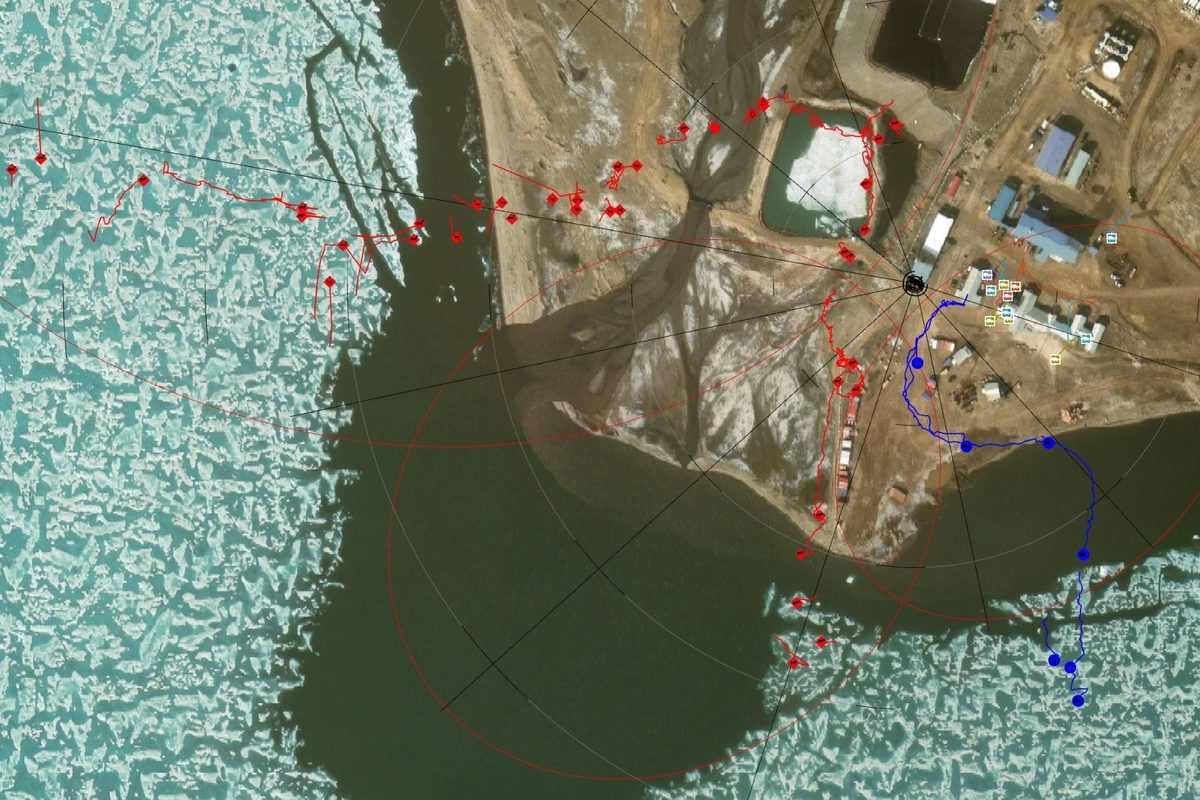
Scientists in Canada’s High Arctic are celebrating the first successful detection of a polar bear family using Bear-dar, an innovative AI radar system at the Environment and Climate Change Canada (ECCC) meteorological station in Eureka, Nunavut. Developed by Polar Bears International (PBI) and Spotter Global, Bear-dar can identify polar bears regardless of weather or time, aiding in safety as climate change forces bears onto land, increasing human encounters.
After extensive testing in Churchill, Manitoba, Bear-dar was officially deployed in Eureka, where it successfully confirmed the sighting of a mother polar bear and her two cubs. Staff promptly escorted the family away from the weather station toward sea ice, enhancing safety for both bears and humans.
Alisa McCall, PBI’s scientific director, emphasized the significance of Bear-dar in alerting staff and facilitating a response plan. The radar works by detecting movement, issuing alerts when potential polar bears are identified, and pairing with cameras for visual confirmation. Future refinements will focus on distinguishing polar bears from other wildlife, such as arctic wolves, and customizing installations for different Arctic locations.
As Bear-dar evolves, planned enhancements may include noise deterrents to further ensure safety during bear encounters.
Source link
