



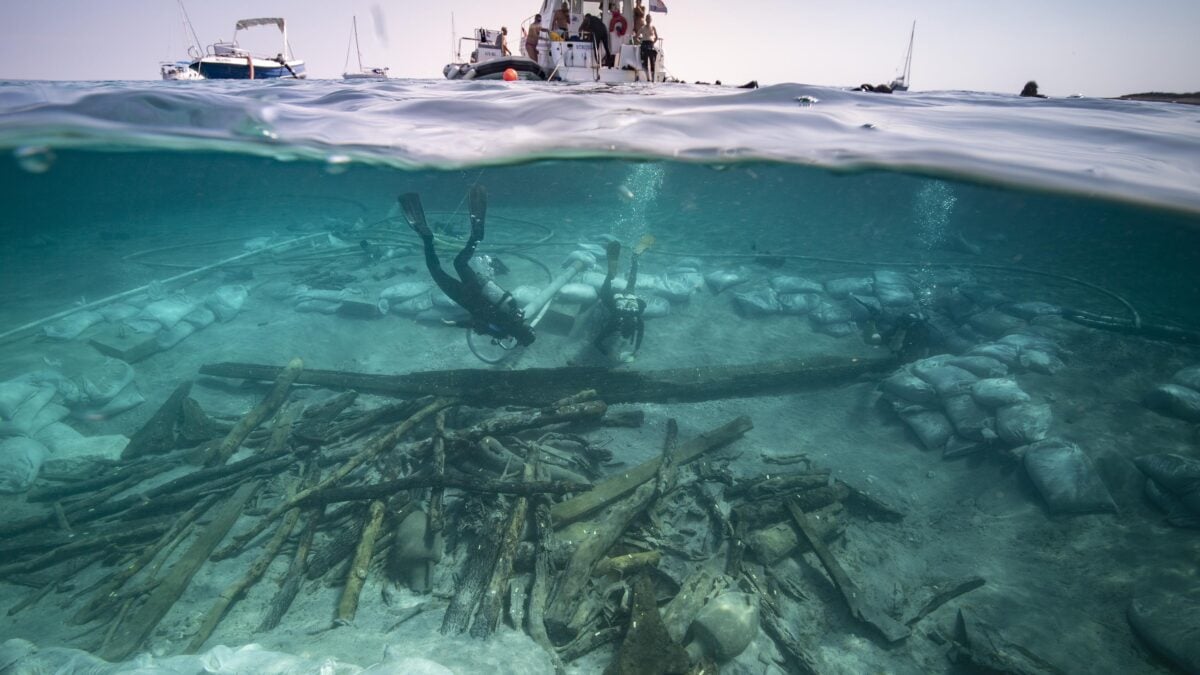
In a recent study published in Frontiers in Materials, researchers examined the shipwreck Ilovik Parsine 1, providing insights into ancient Roman shipbuilding and waterproofing techniques described by Pliny the Elder. Their analysis combined archaeology, chemistry, and palynology, revealing that Roman shipyards utilized a sophisticated organic mixture, known as zopissa (a combination of pine tar and beeswax), to keep ships waterproof.
This study confirmed that shipyards not only applied robust waterproofing techniques but also continuously renovated ships during their voyages. The team identified thick layers of organic glue on the ship’s hull, offering a rare opportunity to study ancient coatings, which typically deteriorate over time.
Using pollen analysis, researchers traced the origins of the materials and learned that several coatings had been applied at different times and locations, shedding light on the ship’s routes and cultural practices in the region. This comprehensive approach allowed them to reconstruct the ship’s journey through the Adriatic Sea and illustrate the technological knowledge circulation across the Mediterranean Basin dating back to the late 7th century B.C. Thus, the study provides valuable information about Roman maritime practices and ancient ship maintenance.
