



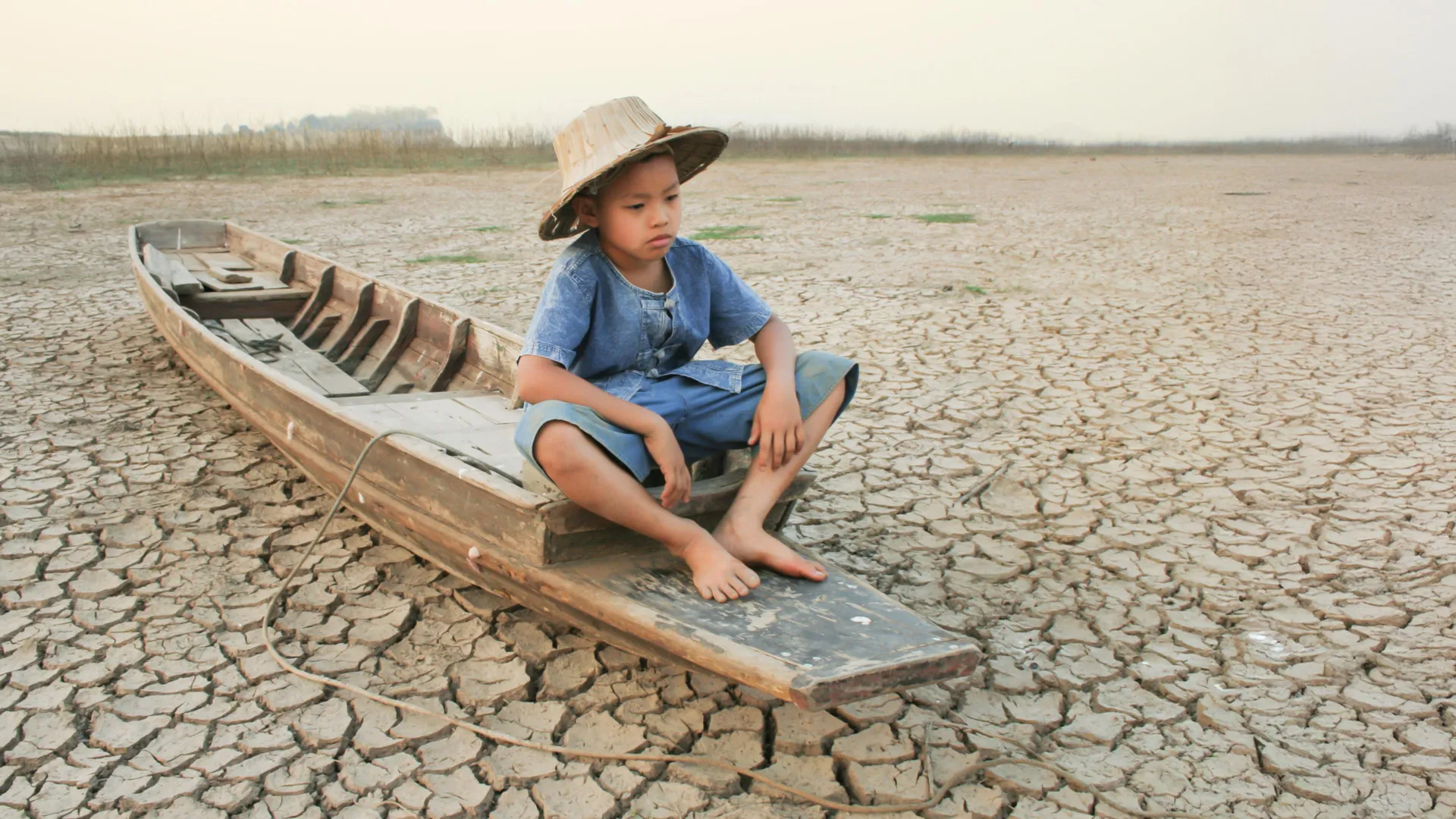
Scientists from the Indian Institute of Technology Gandhinagar (IITGN) have discovered that ocean temperature patterns can help prevent simultaneous global droughts. Their study, published in Communications Earth & Environmental, examined climate records from 1901 to 2020, revealing that only 1.8% to 6.5% of the Earth’s land area experienced synchronized droughts, much less than previous estimates.
The research, led by Dr. Udit Bhatia, modeled droughts as a global network to identify connections among droughts across various regions, including major agricultural areas like Australia, South America, and North America. They found that moderate droughts significantly increase the risk of crop failure, impacting essential crops like corn and soybeans.
Key factors affecting drought patterns include the El Niño Southern Oscillation, which influences global rainfall distribution. The study emphasizes that while rainfall is the primary driver of drought severity, increasing temperatures are also becoming significant, especially in mid-latitude regions.
The findings suggest that understanding these climate dynamics can lead to better food security strategies. By recognizing the interconnectedness of droughts, policymakers can implement proactive measures to stabilize markets and enhance agricultural resilience against climate change.
