



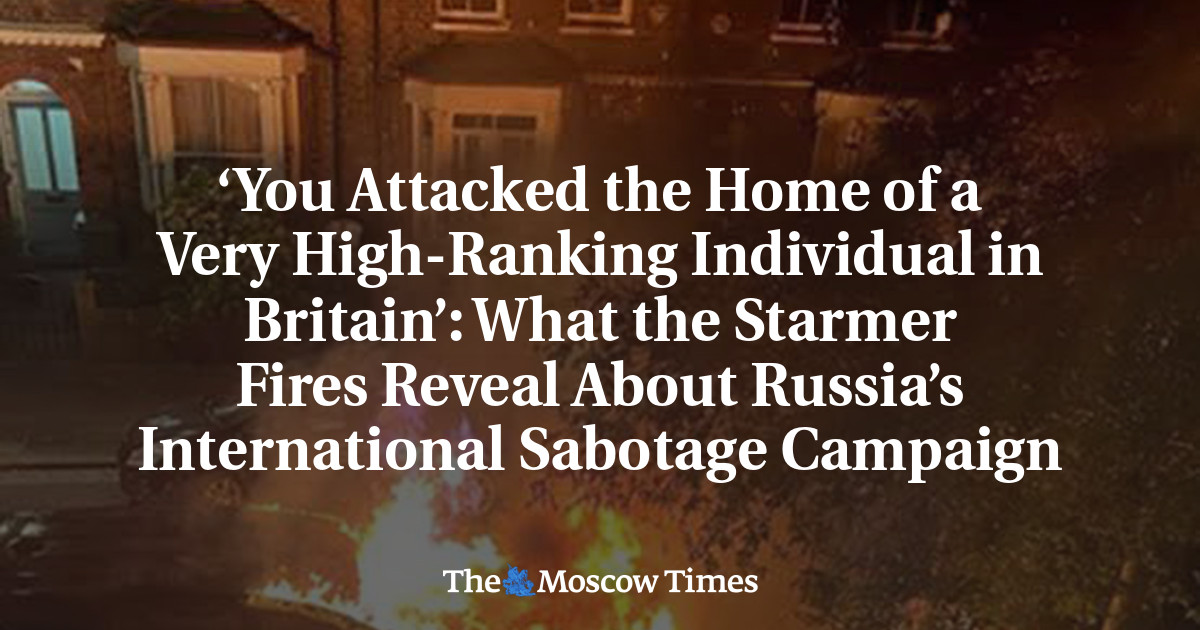
In July 2020, Keir Starmer made his first public appearance as leader of the UK Labour Party. Fast forward to 2026, tensions escalated when a Ukrainian set fire to the Starmer family’s property, signaling a broader trend of sabotage linked to the Russo-Ukrainian conflict. The arson was executed by 21-year-old Roman Lavrinovich and accomplice Stanislav Karpiuc, acting on a plan orchestrated by a Russian handler known as “El Money.” They were convicted after a seven-week trial for conspiracy to commit arson, reflecting a sophisticated wave of sabotage in Europe.
Since 2022, arson has surged as a method of targeting infrastructure related to Ukraine’s war efforts, including storage facilities and transport routes. The Starmer attack exemplifies this evolution, sending a political message against strong UK support for Ukraine. Lavrinovich was recruited through a “gig economy” approach, performing low-risk tasks before escalating to arson. Ultimately, the operation aimed to draw media attention to demonstrate Russia’s reach and capabilities.
The trial highlighted the adaptive nature of these covert operations, where recruitment of vulnerable individuals, such as Ukrainian refugees, is prevalent. Despite the covert tactics and emphasis on operational security, Lavrinovich was arrested shortly after the attacks. This case sheds light on how Russia continues to evolve its sabotage strategy, targeting individuals associated with pro-Ukrainian sentiments and showcasing the dangers faced by such figures in Europe.
Source link
