



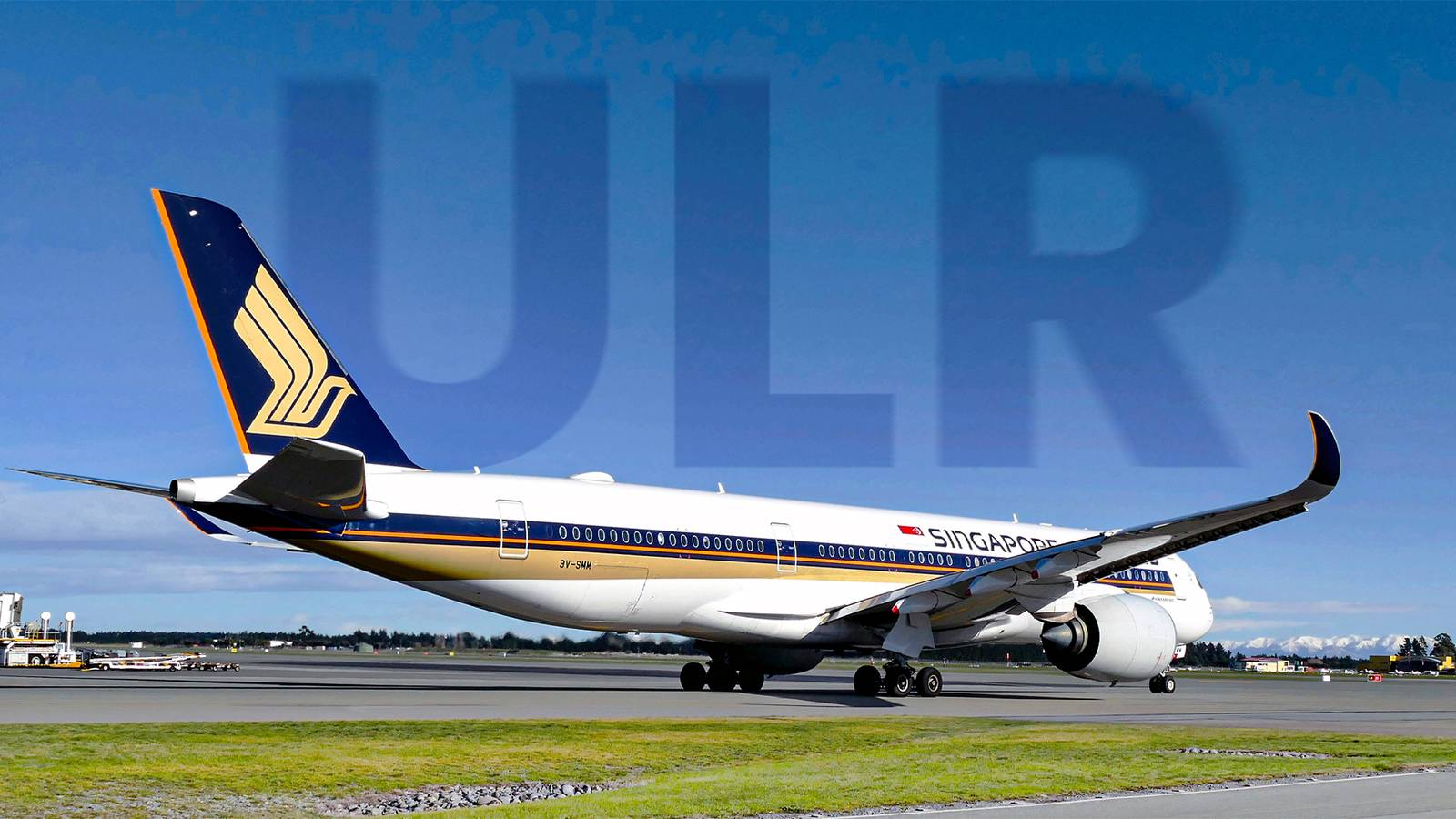
The article discusses the evolution of ultra-long-haul commercial aviation, focusing on the Airbus A350-900ULR, which addresses the financial and engineering challenges of non-stop routes. Traditionally, widebody aircraft faced economic issues due to fuel capacity versus passenger space needs. Singapore Airlines’ pioneering ultra-long-haul flight, SQ21, utilized the four-engine Airbus A340-500, but rising oil prices forced it to shut down, emphasizing the need for more efficient twin-engine designs.
The A350-900ULR, featuring twin Rolls-Royce Trent XWB engines, achieves a remarkable range of 9,700 nautical miles through structural optimization rather than heavy auxiliary fuel tanks. Engineers increased its fuel capacity by reworking the internal structure, removing the need for additional weight while maintaining aerodynamic efficiency.
To accommodate this range, Singapore Airlines’ configuration of the aircraft features only 161 seats, eliminating economy class to reduce weight and create the capacity for maximum fuel. This strategy drastically alters traditional revenue models, relying solely on ticket income from a premium-heavy cabin.
The article also addresses safety regulations concerning twin-engine flights over vast oceans, highlighting the significance of ETOPS-370 certification that allows operations far from diversion airports. This model could lead to a shift in how airlines connect distant markets, allowing for more direct, non-stop routes.
Overall, the A350-900ULR exemplifies how innovative design can optimize performance and profitability in the evolving landscape of long-distance air travel.
Source link
