



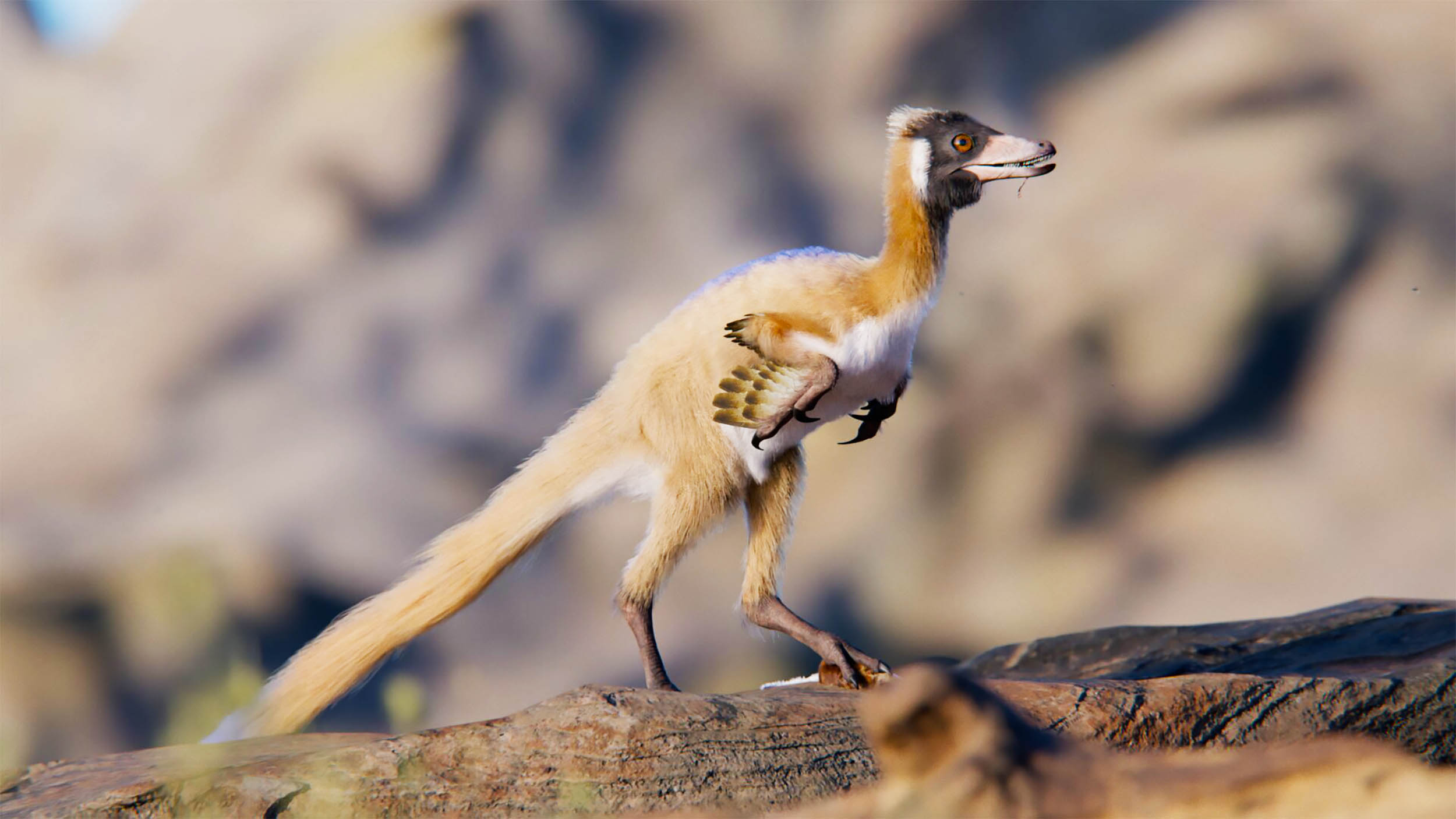
Paleontologists have recently made significant strides in understanding the peculiar group of tiny bird-like dinosaurs known as Alvarezaurus, thanks to a nearly complete 90-million-year-old skeleton discovered in Patagonia. This fossil, identified as Arnashetri seropolisiensis, offers insights into the evolutionary history of these dinosaurs, which are characterized by small teeth and reduced forelimbs.
A research team led by Peter Makowiecki and Sebastian Apesteguia analyzed this specimen, providing a clearer picture of the Alvarezaurus group, previously challenging due to fragmented finds. The discovery at La Buitrera fossil site allows scientists to better interpret existing fossils and map evolutionary changes.
The Arunashetri skeleton suggests that early members of this lineage had longer arms and larger teeth compared to later species, indicating that the extreme adaptations associated with feeding on insects developed later in their evolution. Surprisingly, Arunashetri was confirmed as an adult and weighed less than 2 pounds, making it one of the smallest non-avian dinosaurs.
This discovery emphasizes that many dinosaurs were small and agile, contributing to a better understanding of ancient ecosystems. The research also connects Alvarezaurus distribution to continental drift, showcasing how separated populations evolved independently. Ongoing research at La Buitrera continues to yield important findings in paleontology. The study, which offers a comprehensive understanding of these dinosaurs, was published in the journal Nature.
Source link
