



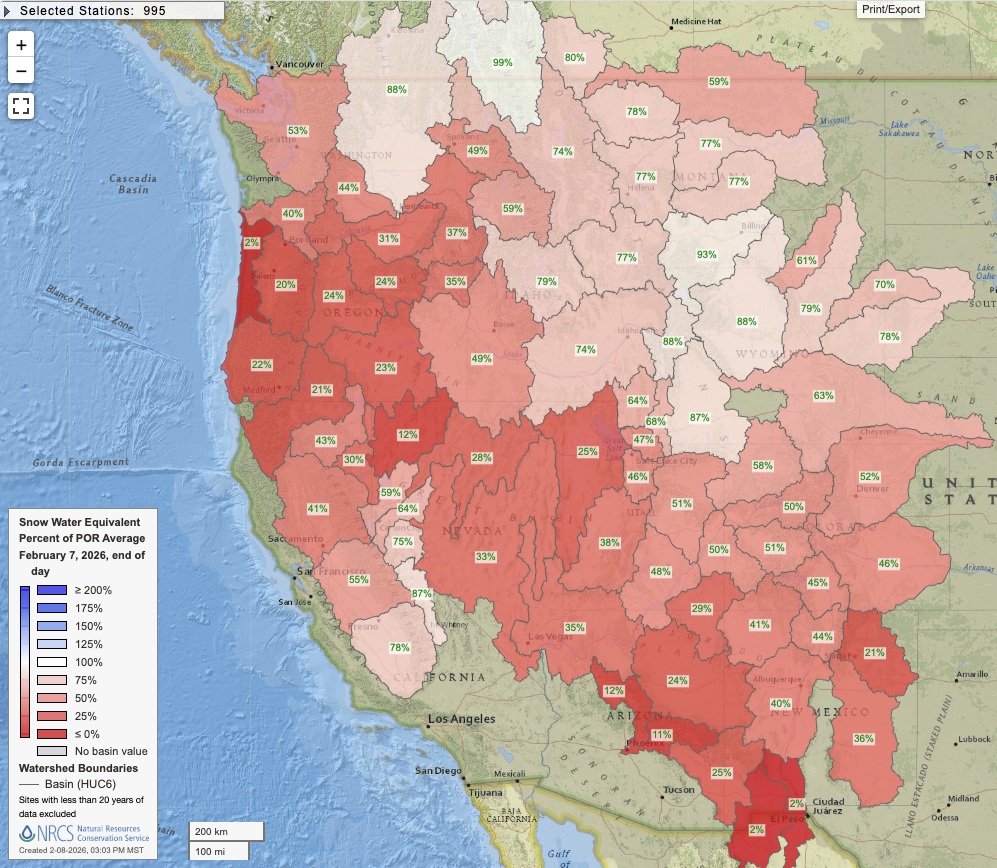
The western United States is experiencing record warm winters, leading to significantly low mountain snowpack levels. As of February 7, snow equivalent water levels across all watersheds are below average, with many areas hitting record lows. While some higher elevations in the southern Sierra Nevada and northern Rockies experienced normal or above-average snow, overall conditions are concerning, raising risks of wildfires and water shortages.
In contrast, the eastern U.S. is facing one of its coldest stretches in decades, influenced by a persistent warm west/cool east weather pattern. A shift is expected that will bring cooler temperatures and precipitation to the West, with a low-pressure system beginning to affect California soon.
Upcoming storms may help alleviate the ongoing snow drought, although their impact remains uncertain. A significant marine heatwave off the California coast could amplify storm activity by adding moisture to the atmosphere, raising rainfall potential.
Looking ahead, weather patterns remain unpredictable due to potential disruptions in the polar vortex, which may lead to more extreme temperature contrasts across the continent later in February. The situation will be monitored closely, with upcoming discussions about changing weather patterns and snow conditions scheduled for a live event.
Source link
