



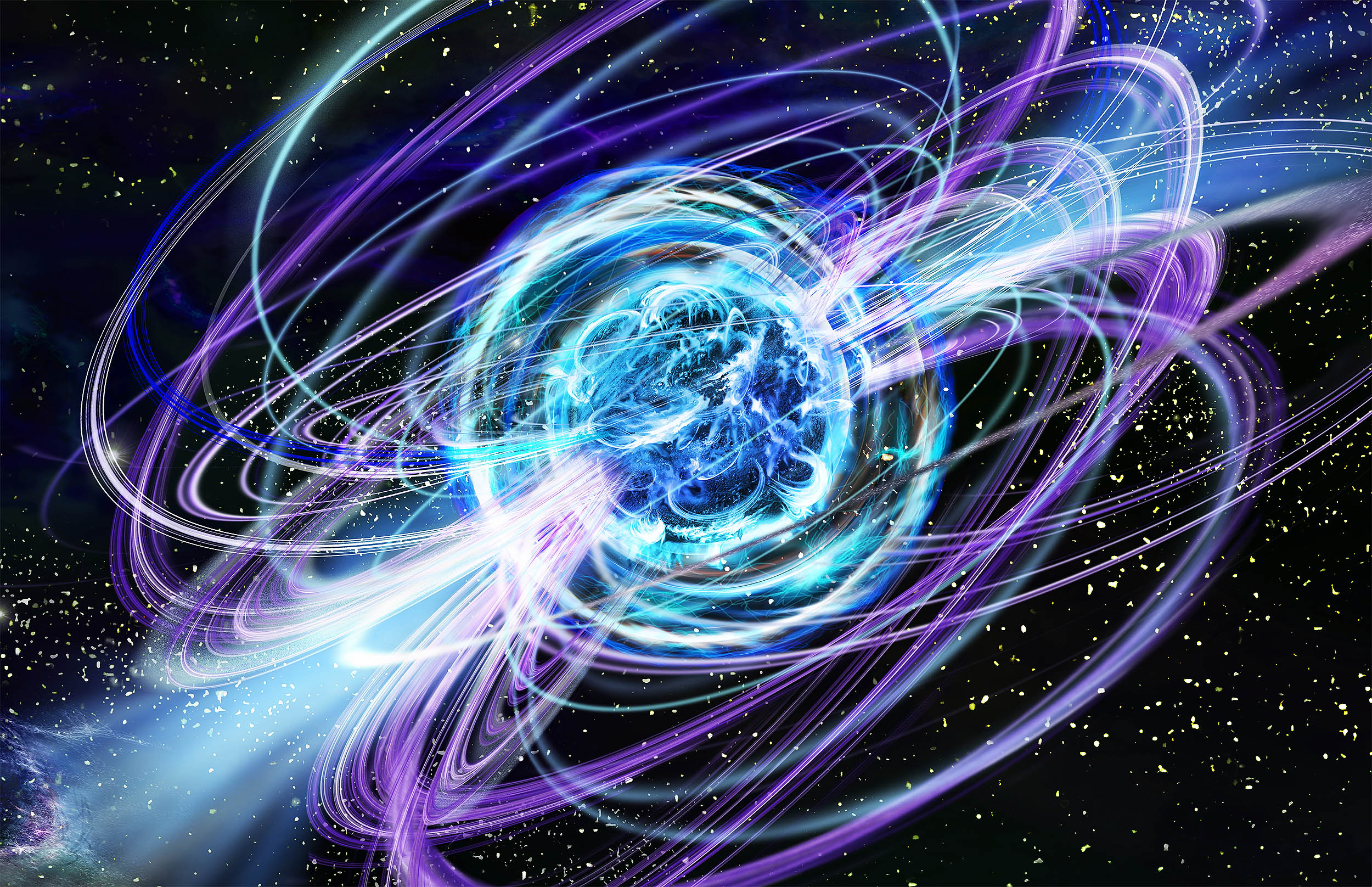
Recent discoveries about magnetar flares, intense bursts from neutron stars, have transformed our understanding of how heavy metals like gold and platinum are formed in the universe. Researchers led by Brian Metzger at the Flatiron Institute have shown that these powerful explosions can generate vast amounts of heavy, rare atoms in mere seconds, suggesting that magnetar flares are responsible for up to 10% of these precious metals in galaxies.
Magnetars, formed from the explosive deaths of massive stars, are incredibly dense and possess magnetic fields trillions of times stronger than those on Earth. Their flares release high-energy X-rays and gamma rays, which can disrupt satellites and contribute to atomic formation. Each flare can produce approximately 20 billion kilograms of heavy elements, contributing significantly to the cosmic inventory of metals, including uranium.
Historically, heavy elements were thought to primarily arise from supernovae and neutron star mergers, but this new understanding positions magnetar flares as a crucial player in element synthesis. Observations dating back to 2004 have hinted at this process, allowing astronomers to connect gamma ray emissions to newly formed isotopes.
Magnetor flares can early contribute metals to nascent star systems and planets, highlighting their importance in the evolution of galaxies. Future telescopes, such as NASA’s Compton Spectrometer and Imager, aim to provide more insights by monitoring these rare events in real time, potentially unraveling more about the cosmic origins of heavy elements.
Source link
