



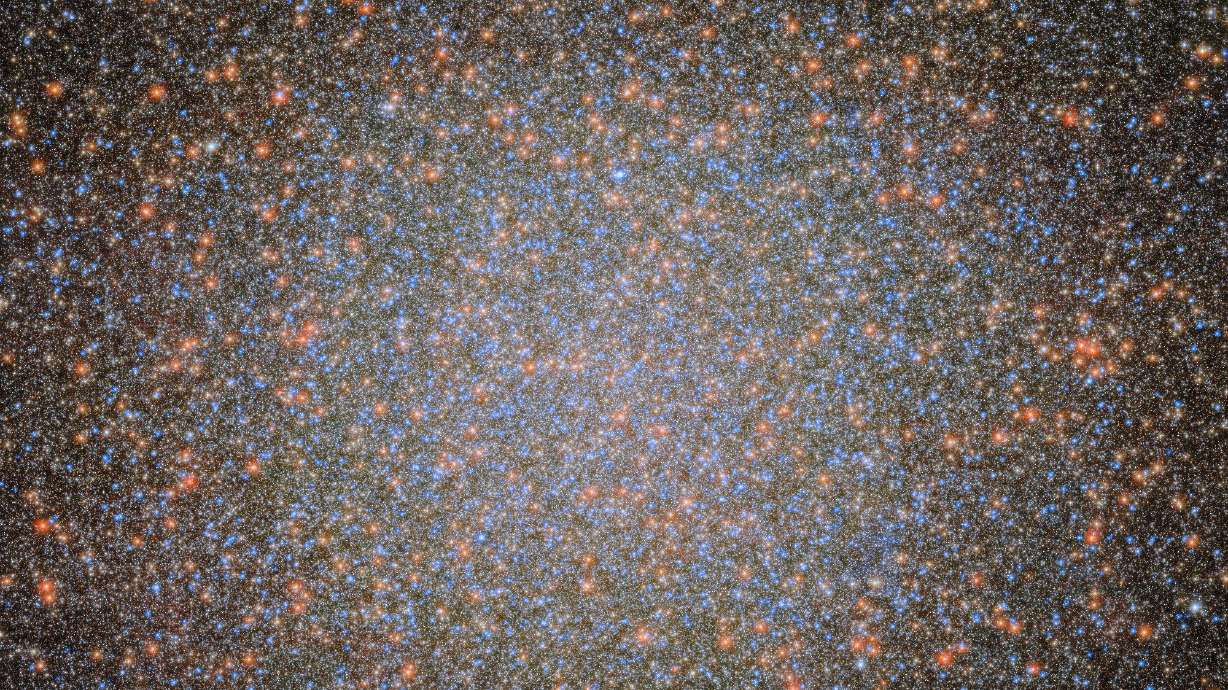
Astronomers from the University of Utah have made a groundbreaking discovery by identifying the first stellar-mass black hole in the Omega Centauri globular star cluster, utilizing data from NASA’s Hubble and James Webb Space Telescopes. This cluster, containing approximately 10 million stars, was previously thought to harbor about 10,000 smaller black holes, which had evaded detection. The research team analyzed over 20 years of Hubble data alongside recent Webb observations, leading to the discovery of a star orbiting a substantial, invisible object named oMEGACat BH-2, confirming it as a black hole.
This black hole possesses surprising characteristics, such as a lower-than-expected mass of 4.46 solar masses and is part of a binary system with a visible star that has the longest orbital period known for a black hole binary, taking 94 years to complete one orbit. The discovery raises questions about black hole formation in such environments. The researchers suggest that this system likely formed dynamically within the cluster rather than as a pre-formed pair. By employing the advanced capabilities of Hubble and Webb, the team hopes to continue uncovering elusive black holes in other globular clusters and anticipates further advancements with NASA’s upcoming Nancy Grace Roman Space Telescope.
Source link
