



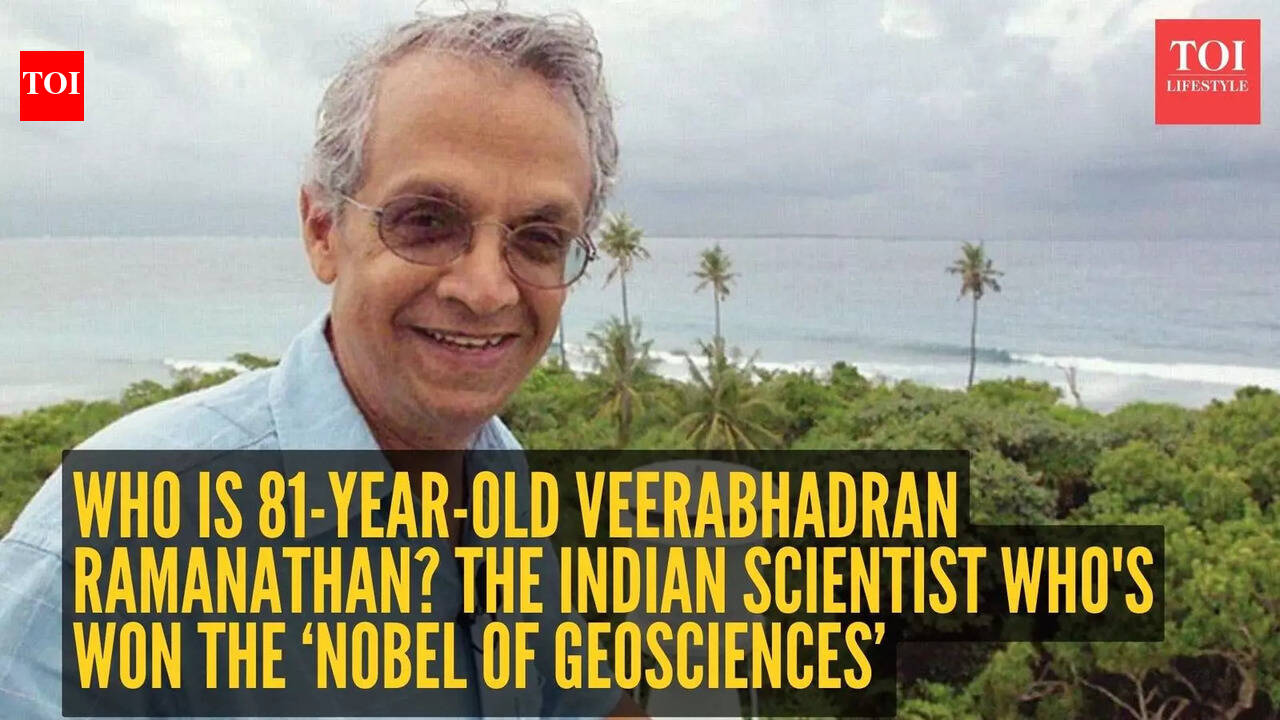
Veerabhadran Ramanathan, an 81-year-old Indian researcher, has been awarded the Crafford Prize, often referred to as the “Nobel of Earth Sciences,” for his significant contributions to climate science. Originally from South India, he moved to the U.S. for further education and began his career examining refrigerant gas leaks, which led him to discover that chlorofluorocarbons (CFCs) trap heat in the atmosphere—much more effectively than carbon dioxide. His groundbreaking 1975 paper highlighted the significance of these gases, challenging the prevailing focus solely on CO2.
Ramanathan’s subsequent research revealed that other trace gases like methane and nitrous oxide also exacerbate global warming and played a key role in the formulation of the 1987 Montreal Protocol, which banned CFCs. He utilized various methods, including satellites and drones, to study the atmosphere directly and contributed valuable insights into the impact of air pollution on climate.
As an advisor to the Pontifical Academy of Sciences, he has guided popes on climate issues, focusing on the ethical implications for the poorest communities. He currently lives in California, emphasizing collective political action for climate change rather than just individual efforts, and advocates for using data-driven science in climate policy.
Source link
