



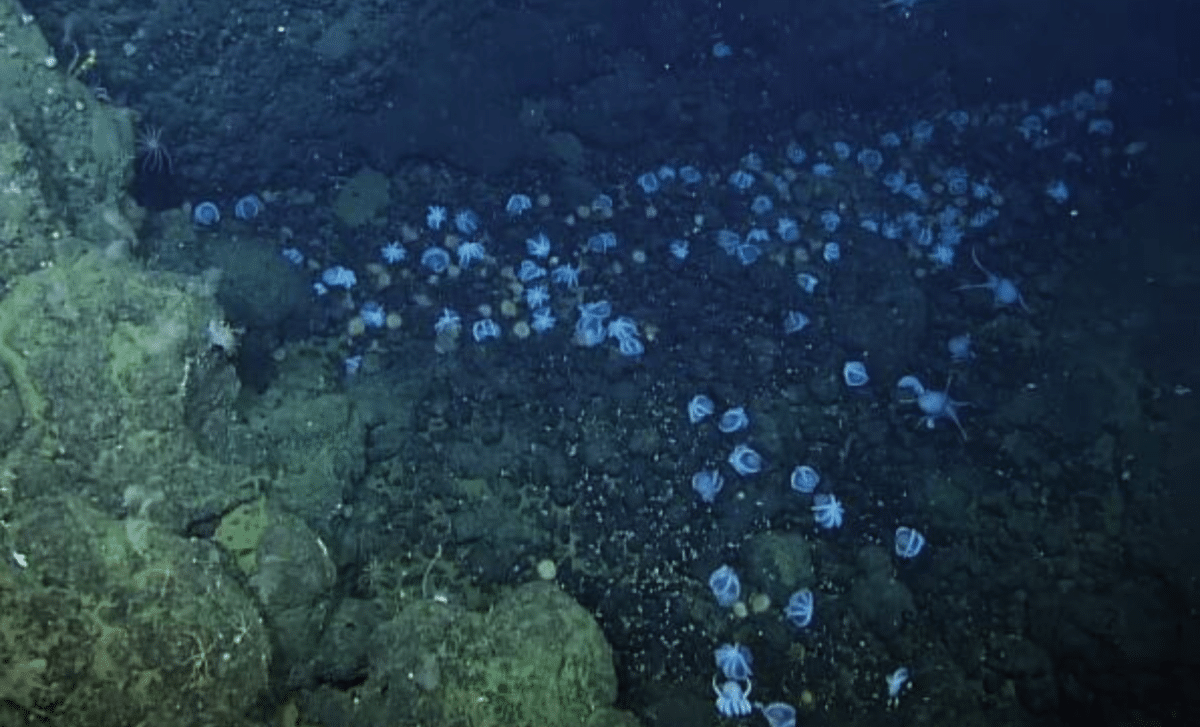
A significant aggregation of deep-sea octopuses has been discovered approximately two miles below the surface off California, near an underwater volcano. This site, dubbed the Octopus Garden, is the largest known gathering of octopuses worldwide, revealing how life adapts to harsh ocean environments.
Site Characteristics
Found on a rocky slope where hydrothermal activity occurs, the area features warmer water patches amid freezing temperatures. This unique environment attracts thousands of Muusoctopus robotus, or pearl octopuses, turning a barren deep-sea area into a thriving biological hub.
Researchers from the Monterey Bay Aquarium Research Institute (MBARI) used advanced technology to monitor the site in detail, noting an estimated population of 20,000 octopuses, which is unusual since this species is typically solitary.
Reproductive Advantages
The Octopus Garden offers a warmer nesting environment for female octopuses, enhancing survival rates for their young. At temperatures around 11 degrees Celsius, the warmer conditions shorten the incubation period, allowing eggs to hatch faster and reducing predator exposure. This thermal advantage is crucial for the reproductive success of octopuses, especially since mothers often die shortly after their eggs hatch.
Ecological Significance
The findings, published in Science Advances, underscore the importance of protecting unique biological hotspots like the Octopus Garden from threats such as climate change and fishing. Understanding how these habitats function and their role in the reproductive behaviors of deep-sea creatures can inform conservation efforts.
In summary, this study reveals how subtle geological features can create significant life zones in the deep ocean and provides clues for understanding the broader ecological impacts of environmental changes on marine species.
