



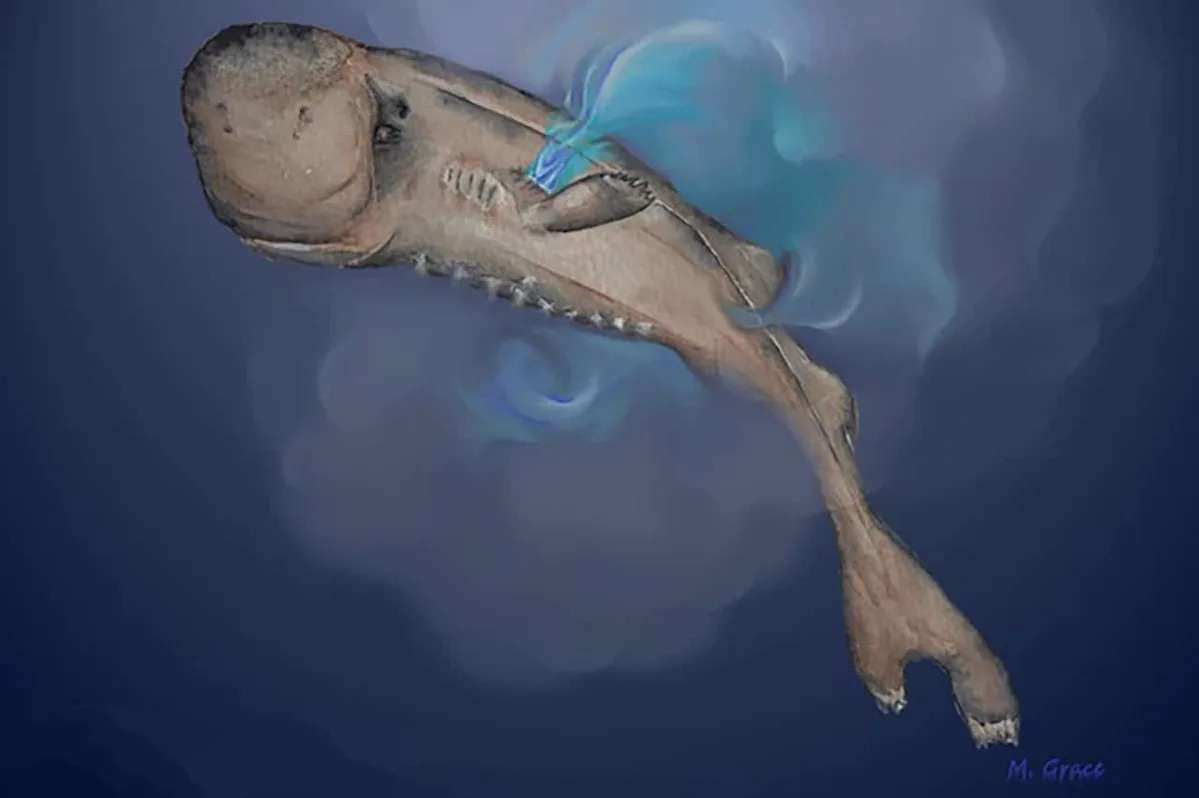
The American pocket shark (Mollisquama mississippiensis), a tiny bioluminescent shark found in the Gulf of Mexico, measures only 5.5 inches long and is one of only two known pocket shark specimens, the other residing in the Pacific Ocean. This unique shark has special sac-like glands near its gills that were once thought to release sex pheromones but were later found to secrete a blue bioluminescent fluid. This mechanism might help attract prey or deter predators.
Discovered accidentally by NOAA researchers studying sperm whales, the shark’s distinct features—including a specific arrangement of its electrical sensing organ and unique dental structures—have been identified using advanced imaging techniques.
Notably, the presence of photophores (light-emitting organs) scattered on its body adds to its bioluminescent capabilities. The American pocket shark’s adaptations highlight the mysterious biodiversity in the Gulf’s deep waters. This discovery underscores the potential for more unidentified species lurking in unexplored ocean depths.
