



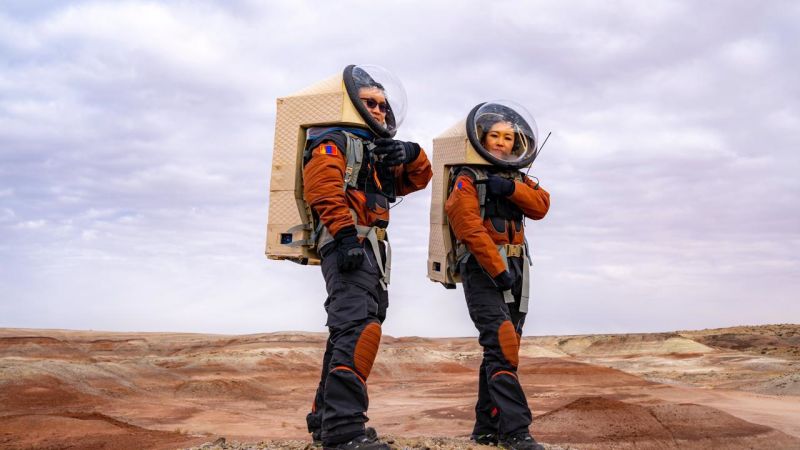
The MARS-V project in Mongolia’s Gobi Desert offers a month-long survival challenge intended to simulate life on Mars for tourists. Participants, after rigorous physical and psychological training, experience extreme conditions reminiscent of the Red Planet, including temperatures ranging from -30 to 45 degrees Celsius. The project aims to create a full Mars analog station by 2029, providing a realistic environment for training scientists and astronauts while also appealing to adventure-seeking tourists.
With activities mimicking actual space missions, such as geological mapping and dealing with communications delays, participants follow a strict daily routine that includes meditation and freeze-dried meals. The Gobi’s landscape and conditions significantly resemble Mars, enhancing the authenticity of the simulation.
CEO Enkhtuvshin Doyodkhuu emphasizes the psychological challenges of prolonged isolation, comparing it to the potential claustrophobia of actual Mars missions. While NASA has conducted similar analog studies, MARS-V distinguishes itself by integrating tourism into scientific research, making the experience more accessible at an estimated cost of $6,000 per month, versus millions for actual space travel.
The MARS-V camp is set to open to the public in a few years, aiming to inspire future generations about life beyond Earth. For those not seeking to brave the freezing simulations, more comfortable accommodations are available at nearby lodges during summer months. Overall, MARS-V presents a unique opportunity for thrill-seekers and space enthusiasts to engage with the concept of extraterrestrial life in an immersive environment.
Source link
