



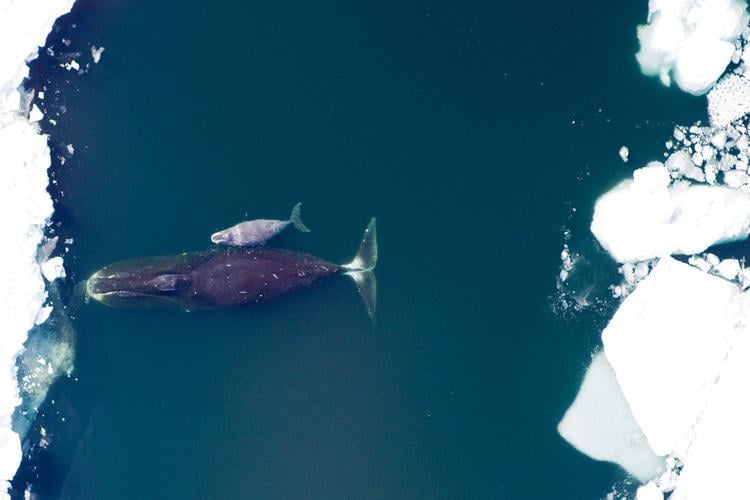
Bowhead whales present a fascinating biological paradox: they are massive, long-lived mammals—living over 200 years and weighing tens of tons—yet they exhibit surprisingly low rates of cancer compared to what traditional cancer theories would suggest. According to Peto’s paradox, larger animals with longer lifespans should have a higher risk of developing cancer due to the greater number of cells and the increased opportunities for DNA mutations. Yet, bowhead whales defy this expectation, prompting scientists to explore their unique evolutionary adaptations that help suppress cancer and maintain cellular health.
Research, particularly a significant 2015 genome study, has indicated that bowhead whales possess specific genetic adaptations that enhance DNA repair and maintain cellular integrity. These adaptations include changes in pathways related to DNA repair, cell cycle control, and metabolism. One notable find is the increased levels of CIRBP (cold-inducible RNA-binding protein), which seem to facilitate superior repair of dangerous DNA damage.
The complexity of bowhead whale biology offers insights into aging and cancer resistance. Instead of simply tolerating genetic damage, their cells are adept at repairing it and selectively eliminating damaged cells. This ability to manage and respond to DNA damage is crucial for their longevity.
Furthermore, the bowhead whales’ Arctic habitat shapes not just their physical characteristics but also their cellular mechanisms, making them valuable subjects for research in aging and cancer biology. Understanding the bowheads’ genome and cell functions could inform scientific approaches to human longevity, though direct applications remain complex due to evolutionary differences.
Ultimately, bowhead whales serve as living models for studying the evolutionary relationships between size, lifespan, and cancer resistance. Their existence underscores the intricate balance of biological systems that contribute to longevity, offering potential pathways for future research in understanding aging in mammals, including humans.
Source link
