



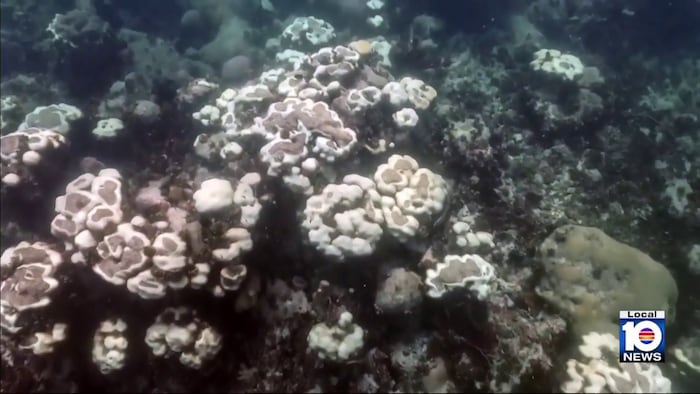
Coral reefs in South Florida are facing renewed threats as ocean temperatures rise, prompting NOAA to issue coral bleaching alerts. Ian Enochs from NOAA reported early signs of bleaching at Cheeka Rocks, a historically resilient coral site. This situation recalls the dangerous summer of 2023, which saw unprecedented mass bleaching and a 100% bleaching rate in some areas.
Currently, South Florida is experiencing extreme heat, with 38 consecutive days of high temperatures, exacerbating the risk for local corals. NOAA highlighted that coral health can deteriorate quickly, raising concerns for the entire reef ecosystem. While some nearby reefs showed fewer signs of stress, Cheeka Rocks remains severely affected.
The ongoing crises have led to significant coral losses in Florida, and experts believe the current levels of stress may surpass last year’s. The Coral Restoration Foundation (CRF) emphasizes the importance of restorative efforts, having previously moved stressed corals to protected environments during heatwaves.
CRF has prepared for potential emergencies and has requested regulatory approval to relocate corals to better habitats. Meanwhile, the University of Miami is actively collecting elkhorn coral to maintain genetic diversity for future resilience. The situation remains dire, and proactive measures are being implemented to address the ongoing threats to coral reefs.
Source link
