



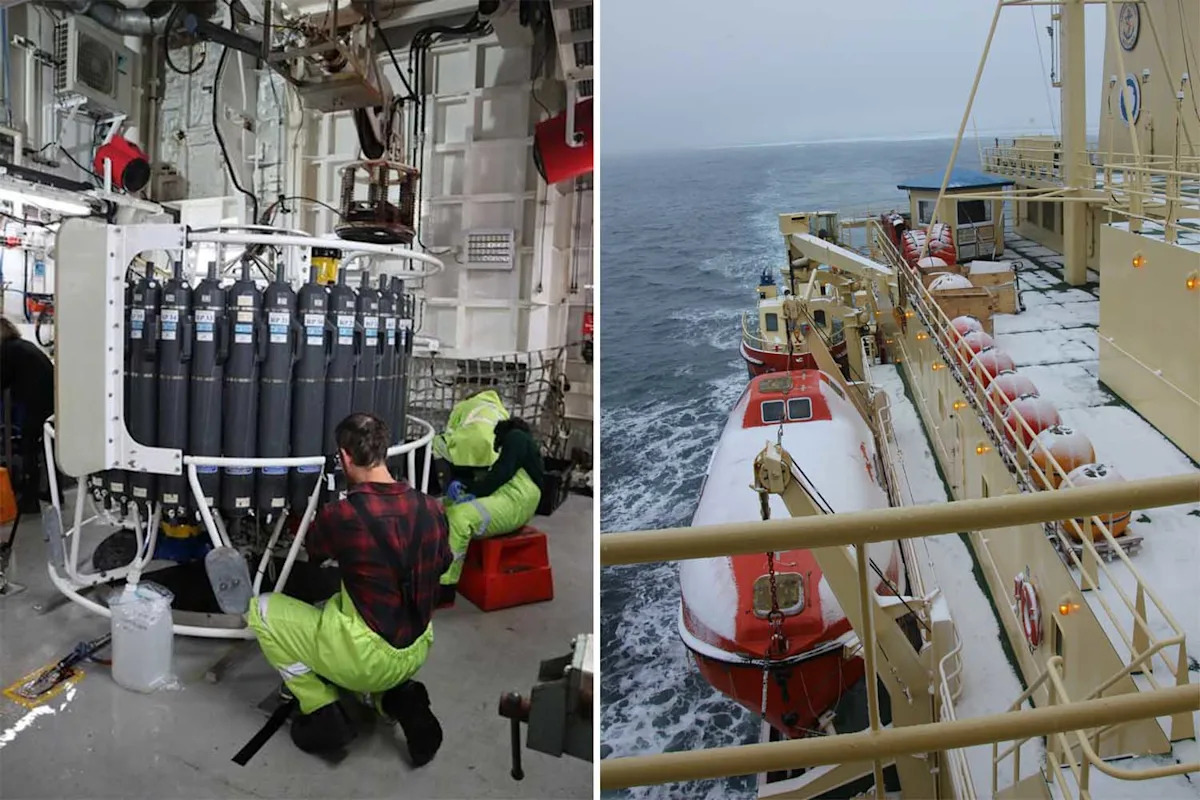
Australian scientists, led by Dr. David Gwyther from the University of Queensland, have investigated the coldest and densest waters in the world, specifically focusing on Cape Darnley in Antarctica. This region significantly influences global weather patterns, yet is known from only four remote locations.
Gwyther’s team found that the formation of these Antarctic bottom waters is delicately balanced by two competing processes: freshwater from melting snow under the Amery Ice Shelf reduces water density, while sea ice formation increases salinity, enhancing density. Alarmingly, climate change is disrupting this balance, which could lead to dramatic weather changes in regions as distant as Northern Europe and Africa.
The study highlights the extreme conditions at the ocean floor, where unique marine life, including spider crabs and fish with antifreeze blood, thrive. Understanding these processes is crucial, as shifts in the formation of dense water could have catastrophic impacts on global climates, as modeled comparisons between the UK and Canada suggest.
The research underscores the sensitivity of these systems to climate change, with potential consequences for future ocean water density and global climate patterns.
Source link
