



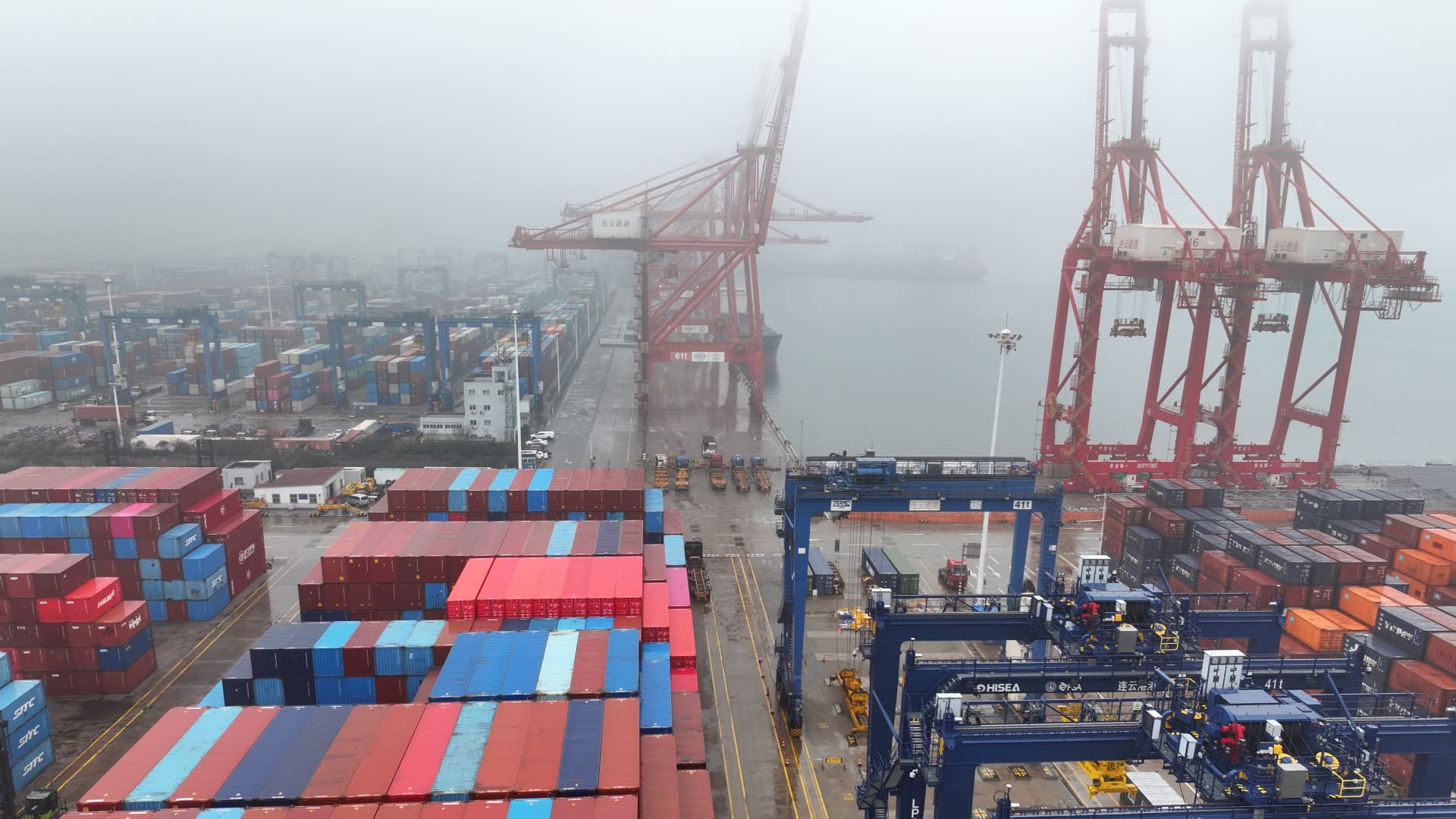
On March 1, 2026, a cargo ship is docked at Lianyungang Port in Jiangsu Province, China. Recent data indicates a significant drop in Chinese factory activity for February, attributed to manufacturers halting production and shipments during the long Lunar New Year holiday. The official manufacturing purchasing managers index (PMI) fell to 49, below the expected 49.1, marking the second consecutive month of contraction. In January, the PMI was 49.3, following a brief recovery in December.
The composite PMI, which encompasses both manufacturing and services, also declined to 49.5 from January’s 49.8, with the non-manufacturing PMI dropping slightly to 49.5. NBS chief statistician Huo Lihui noted that the holiday’s timing and reduced factory operations contributed to this decline. The holiday, lasting from February 15-23, was the longest on record, compared to last year’s eight-day break.
In contrast, private surveys showed a sharp recovery in manufacturing, with S&P Global’s RatingDog China Integrated Manufacturing PMI rising to 52.1, the highest since December 2020, fueled by strong new export orders. Goldman Sachs emphasized that the official survey, based on over 3,000 companies, is more comprehensive than the smaller private one conducted mid-month.
China has faced challenges in combating deflation since the pandemic, struggling with a prolonged real estate downturn and a weak job market. Economists anticipate that the government will lower its growth target for the year to 4.5%-5% from the previous “around 5%.” Zhiwei Zhang, chief economist at Pinpoint Asset Management, suggests that upcoming economic planning will clarify the government’s policy approach, with expectations for moderate investment expansion if growth weakens. Consumer and producer inflation figures for February are set to be released shortly.
Source link
