



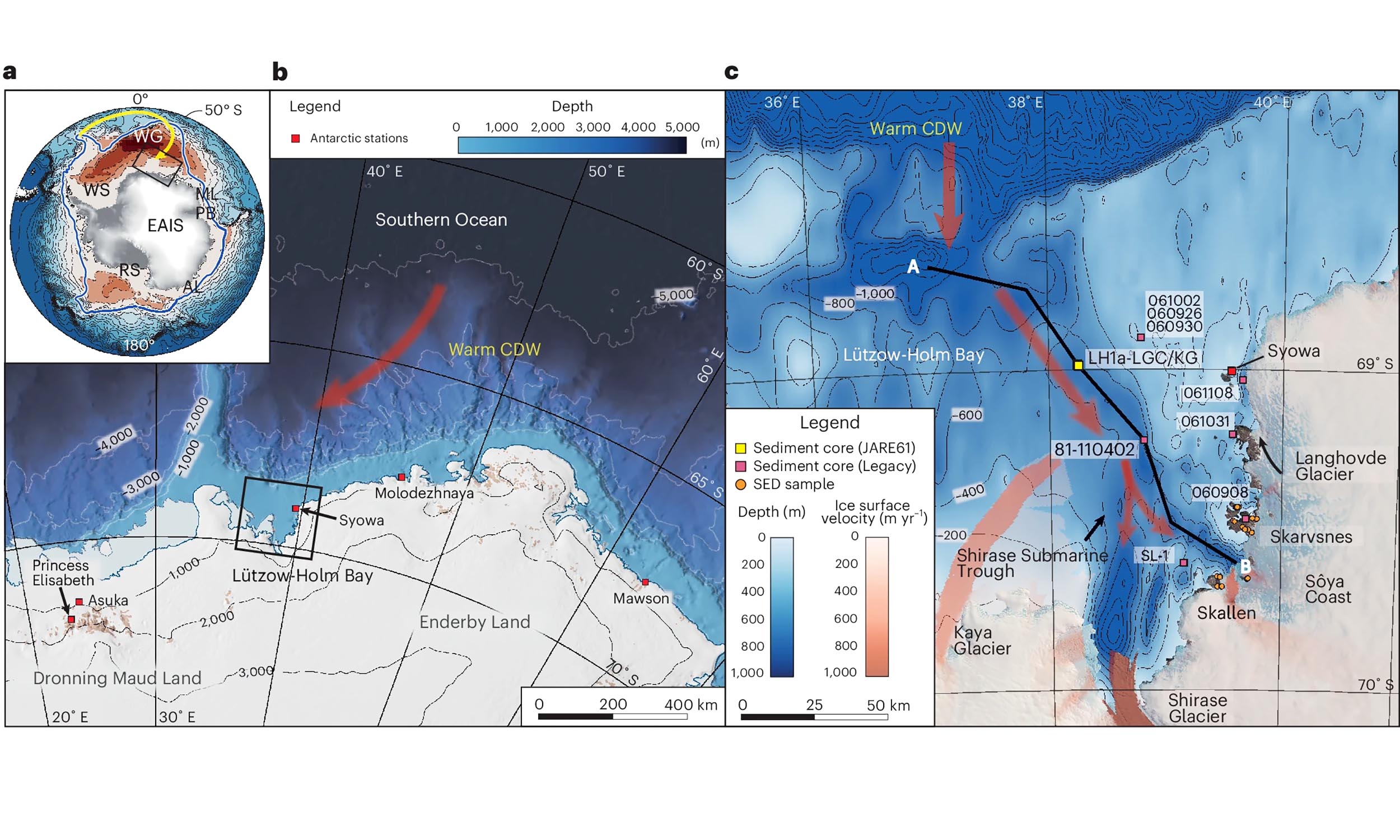
A recent study led by Professor Yusuke Suganuma from the National Institute of Polar Research reveals that about 9,000 years ago, the East Antarctic Ice Sheet experienced rapid disintegration due to warm ocean currents. Evidence from submarine sediments near Japan’s Showa Station indicates that this ancient collapse was fueled by warm, salty deep ocean currents that surged onto the continental shelf, undermining the ice shelves and accelerating inland ice flow into the ocean.
The research highlights a positive feedback loop where melting snow freshened the surface ocean, preventing mixing and allowing warm deep water to migrate landward. This process exacerbated ice loss as the warmer water trapped beneath the ice accelerated melting. Despite historically viewing East Antarctica as stable, new reconstructions suggest that even ice resting on rock can thin quickly if warm water reaches it.
The study emphasizes the potential for rapid Antarctic ice loss to contribute significantly to sea level rise, which could redraw coastlines globally. It warns that current climate models may underestimate how quickly ice sheets can break apart, stressing the importance of understanding these dynamics as human-induced greenhouse gas emissions continue to rise. This research underscores that future Antarctic ice loss will largely depend on ocean temperatures influenced by climate change. The findings are published in the journal Nature.
