



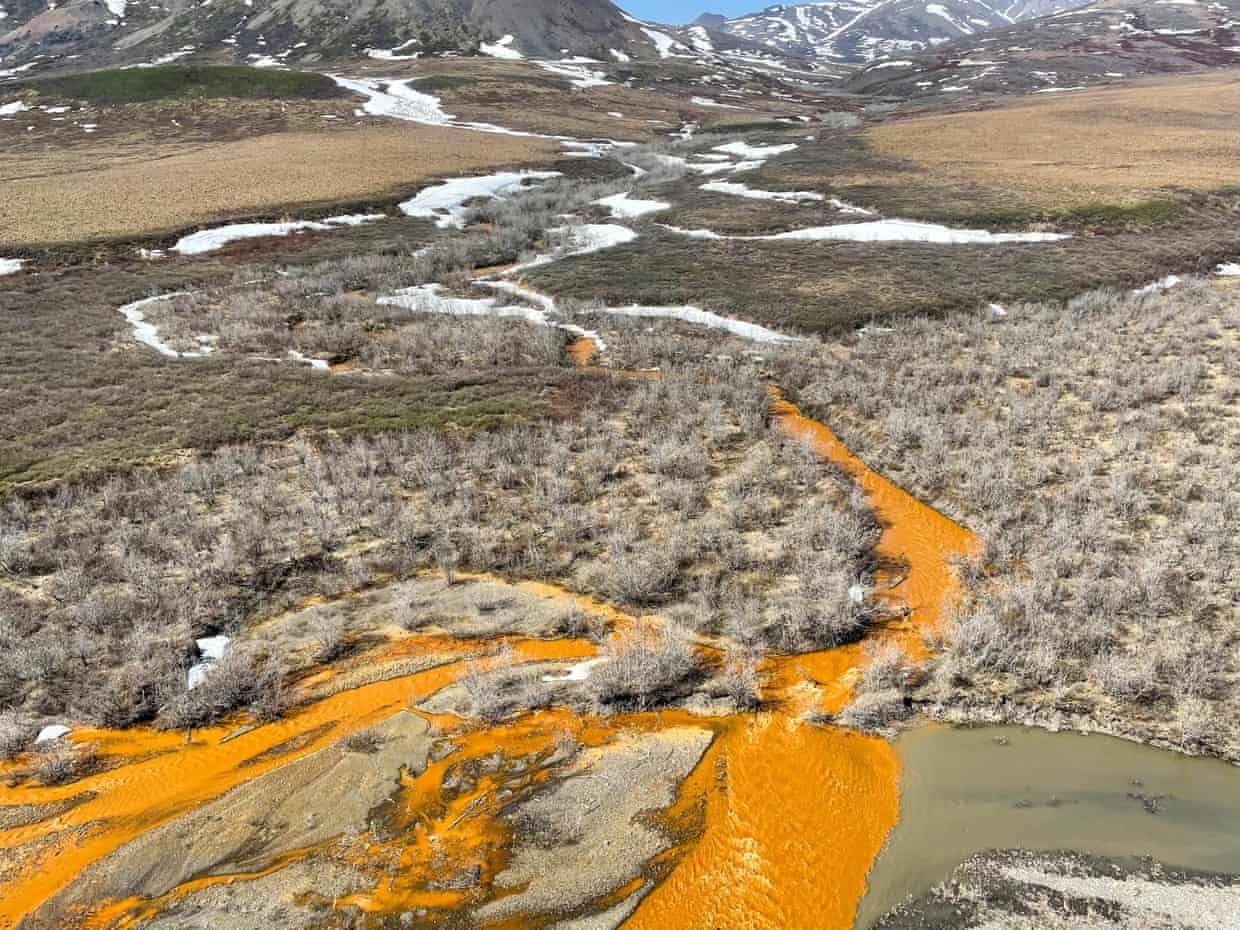
In the summer of 2019, ecologist Patrick Sullivan discovered that the Salmon River in northern Alaska, typically known for its pristine waters, had turned bright orange. This alarming discoloration was linked to melting permafrost, which releases sulfur-containing minerals that form sulfuric acid when exposed to air and water. The resulting acidic water is rich in metals like iron and aluminum, resembling pollution from mining.
This ecological shift has serious consequences, particularly for aquatic life. The orange coloration adversely affects larval aquatic insects, a vital food source for fish, and has coincided with a dramatic decline in chum salmon populations, critical for local communities. Additionally, predators like bears and eagles face challenges in hunting due to the murky water.
Sullivan and his team’s findings suggest a need to better understand these changes and protect remaining healthy rivers as Alaska’s landscape continues to evolve due to climate change.
Source link
