



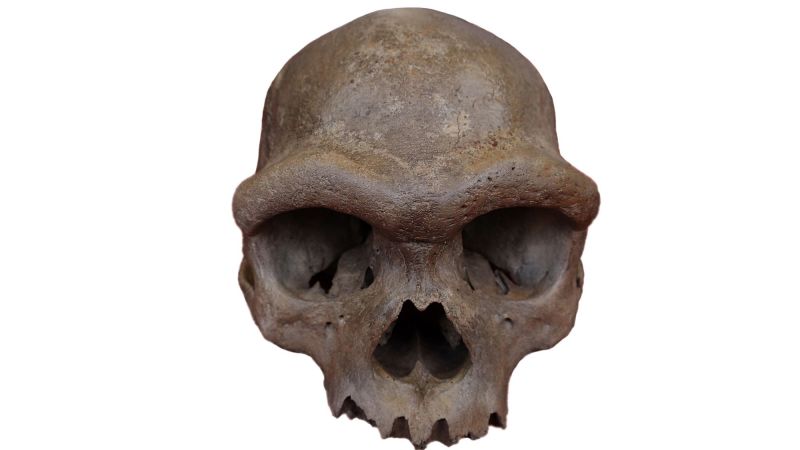
The mystery surrounding the Denisovans, an ancient human group identified from a 60,000-year-old finger bone discovered in Denisova Cave, is set to advance in 2025 as new research emerges. Initially revealed through DNA analysis in 2010, the Denisovans interbred with Homo sapiens, but little was known about their physical traits, habitat, or extinction.
Recent studies have surfaced compelling evidence regarding the Denisovans, particularly from a skull found in 2018 in Harbin, China, which may represent a new species dubbed “Homolongi” or “dragon man.” DNA linked to Denisovans has been detected in modern Asian populations but not in Europeans, suggesting their primary habitat was in Asia.
Research led by Qiaomei Fu aims to extract ancient DNA from the dragon man’s remains but met challenges. Notably, a breakthrough came when the team recovered Denisovan genetic material from tartar on the dragon man’s teeth, raising the possibility of hybridization between species. Further protein analysis suggested the skull belonged to the Denisovan lineage.
While the name “Denisovan” is likely to stay, the linkage with Homolongi could formalize the identification of many Denisovan fossils. Experts highlight that this evidence represents significant progress in understanding Denisovan anatomy, behaviors, and their relationship with modern humans.
More discoveries from sites in China, including additional skulls, could further illuminate Denisovan origins and connections to other ancient human groups, including potential previously unidentified “ghost lineages” in our DNA. Ongoing research aims to deepen our understanding of Denisovans and their impact on modern human evolution.
Source link
