



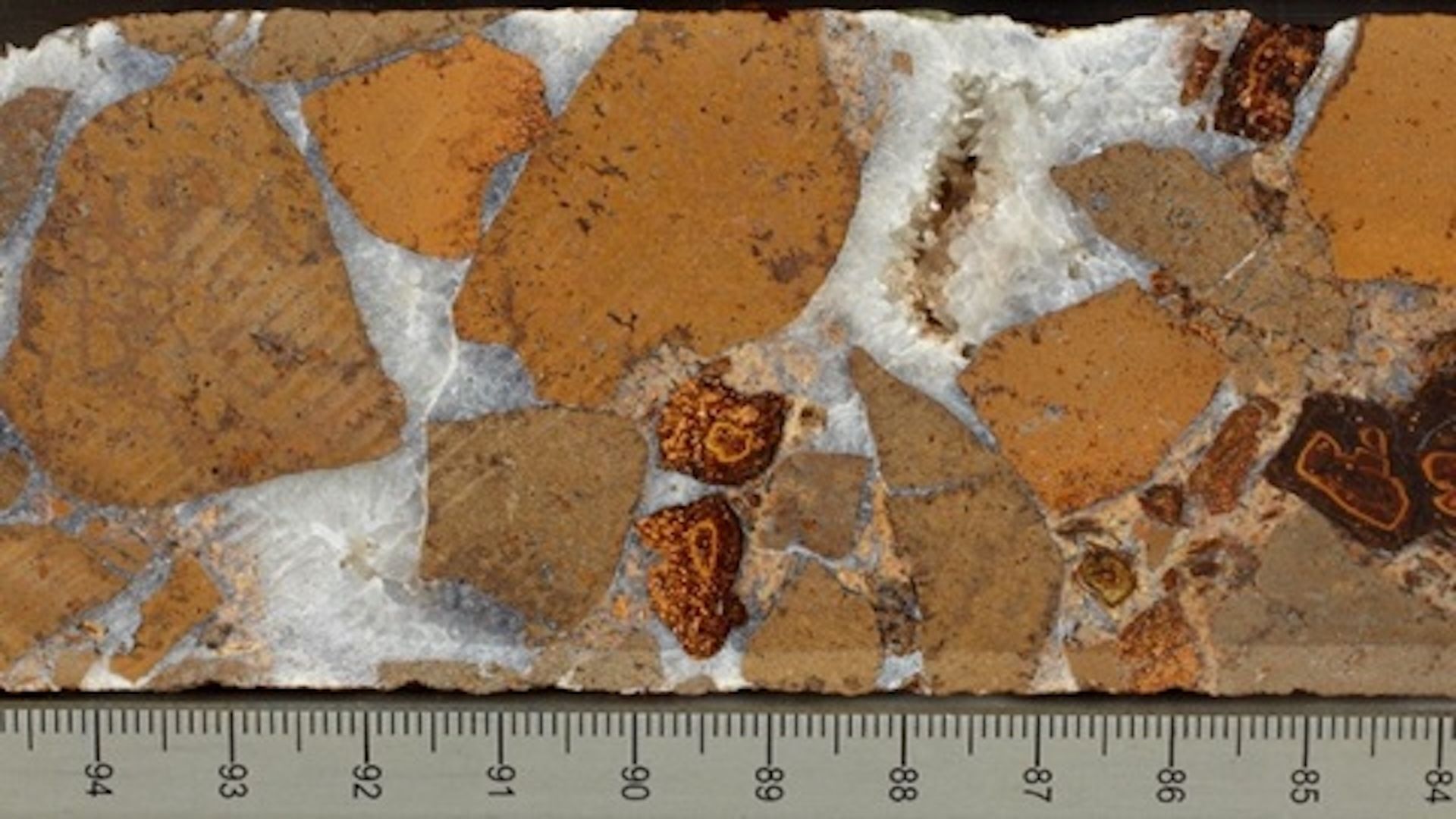
A new study published in Nature Geoscience reveals that ancient lava debris on the ocean floor acts like a “sponge,” storing significant amounts of carbon dioxide—between two and 40 times more than the upper crust. This discovery sheds light on past climate changes by analyzing the South Atlantic ocean floor, where cores extracted showed carbon dioxide stored as carbonate minerals due to interactions between seawater and volcanic rocks over millions of years.
The research, led by Rosalind Coggon from the University of Southampton, indicates that volcanic activity at mid-ocean ridges releases carbon into the ocean, while the ocean simultaneously serves as a carbon sink. The study highlights the role of mineral-rich volcanic debris, specifically breccia, in retaining CO2, potentially storing up to 20% of the carbon dioxide released as the ocean crust formed.
Cores taken from a 61-million-year-old section revealed an average of 7.5% of the core’s weight as carbon dioxide. The findings suggest that the amount of CO2 stored in breccia is influenced by oceanic CO2 levels, breccia thickness, and the movement of tectonic plates, emphasizing its importance in the long-term carbon cycle and its potential impact on Earth’s climate history.
