



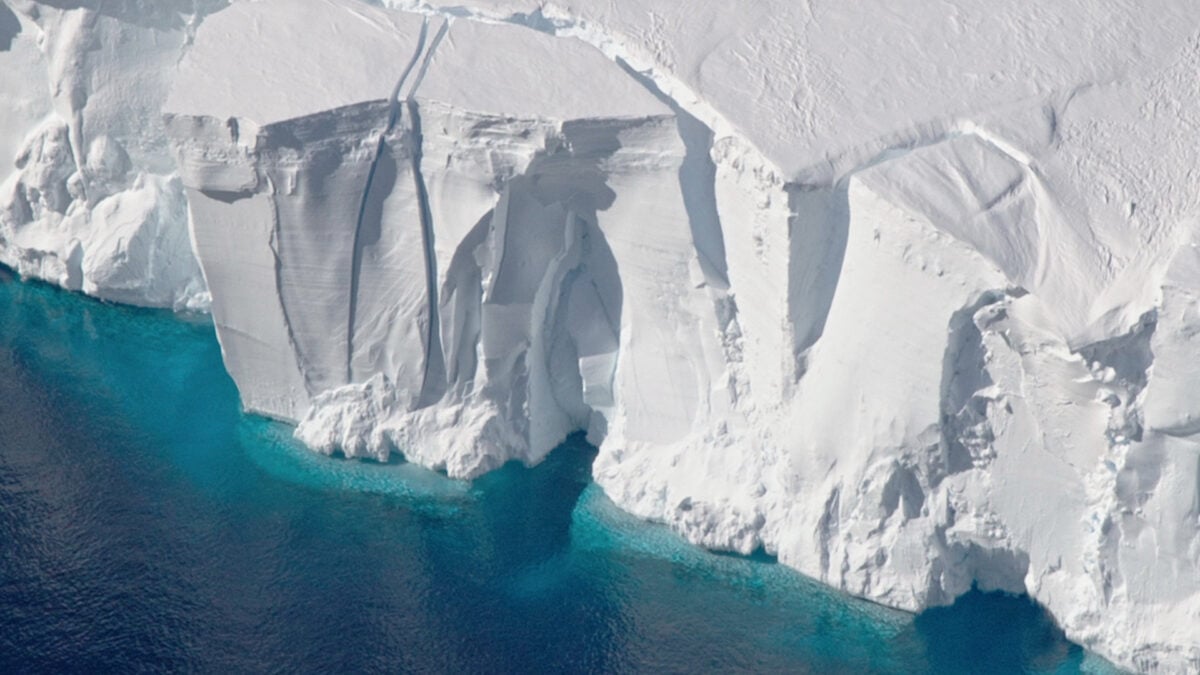
Thwaites Glacier, known as the “Doomsday Glacier,” is a critical focus in climate studies due to its potential to raise global sea levels by up to 10 feet if it fully collapses. Recent research by Tanson Pham from Australian National University has revealed that glaciers in Antarctica are less stable than previously believed, with hundreds of previously undetected glacial earthquakes occurring between 2010 and 2023. The study, published in Geophysical Research Letters, recorded 362 glacial earthquakes, mostly in the vicinity of Thwaites Glacier.
These earthquakes, characterized by low-frequency seismic waves with a magnitude around 5, primarily result from iceberg capsize. Although glacial earthquakes were first identified in Greenland, their occurrence in Antarctica was suspected but difficult to detect due to their smaller magnitude. Pham utilized local seismic stations in Antarctica to catalog these events, uncovering many previously unrecorded incidents.
Most earthquakes cluster near Thwaites, which has seen its ice flow into the ocean double over the past 30 years, contributing significantly to sea level rise. Interestingly, these seismic events do not align with seasonal warm temperatures but seem associated with the glacier’s accelerating movement. A smaller number of earthquakes near Pine Island Glacier remain enigmatic, occurring farther from the coast, where iceberg capsizing is unlikely. Pham urges further research to better understand the implications of these seismic activities on glacier stability.
Source link
