



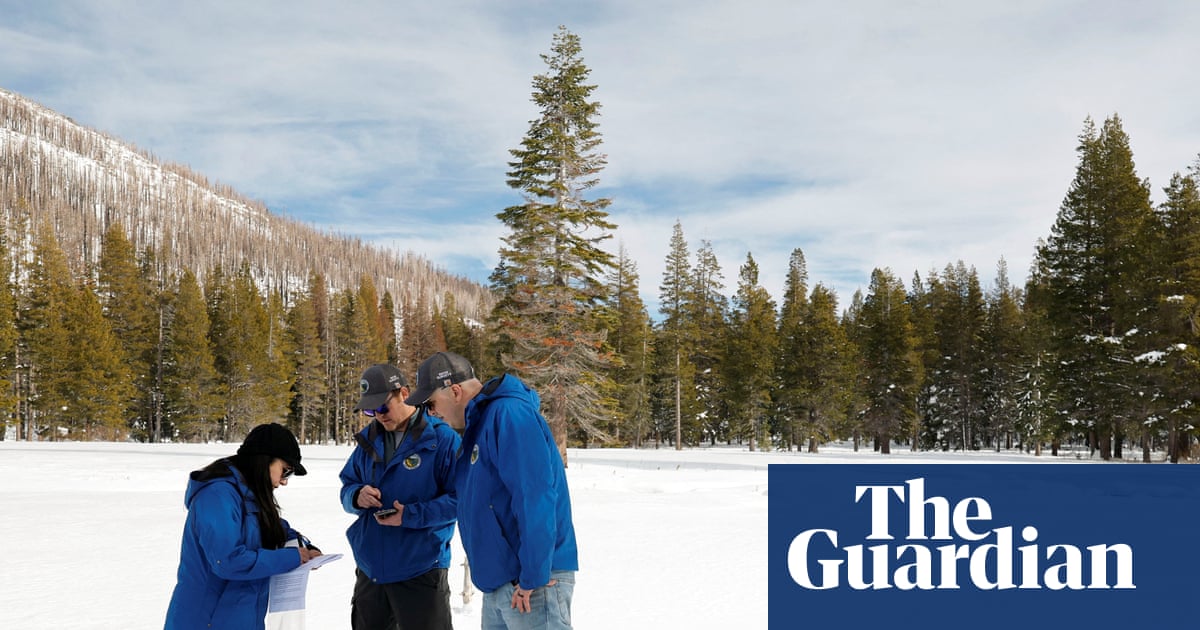
Scientists announced that a series of December storms significantly improved California’s snowpack, currently at 71% of average, as the state monitors its water resources for the year ahead. The first snowpack survey, led by state hydrometeorologist Angelique Fabiani-Leon at Phillips Station in the Sierra Nevada, recorded a snow depth of 24 inches (61 cm). This snowpack acts as a crucial “frozen reservoir,” supplying about one-third of California’s annual water, as it melts into rivers and streams in spring.
While the recent storms marked a positive change after a warm, dry period, officials cautioned that it’s too early to assess their long-term impact. The moisture content of the snowpack is currently at 50% of the average for this time of year and 21% of the average for April 1, when peak snowpack is typically observed. David Lizardo, from the hydrology division, noted a trend of more rain than snow, expressing hope for increased snowfall by April.
Despite current favorable conditions, California’s water supply will depend on ongoing storms throughout winter and early spring. Reservoir levels are at 123% of average, highlighting the state’s complex water management system, which is crucial for the 39 million residents and the agriculture sector that largely feeds the country. In recent years, the state has oscillated between extreme wet and dry conditions, with last year’s snowpack moisture content at 91% of average, underscoring ongoing challenges in water usage management amidst prolonged droughts.
Source link
