



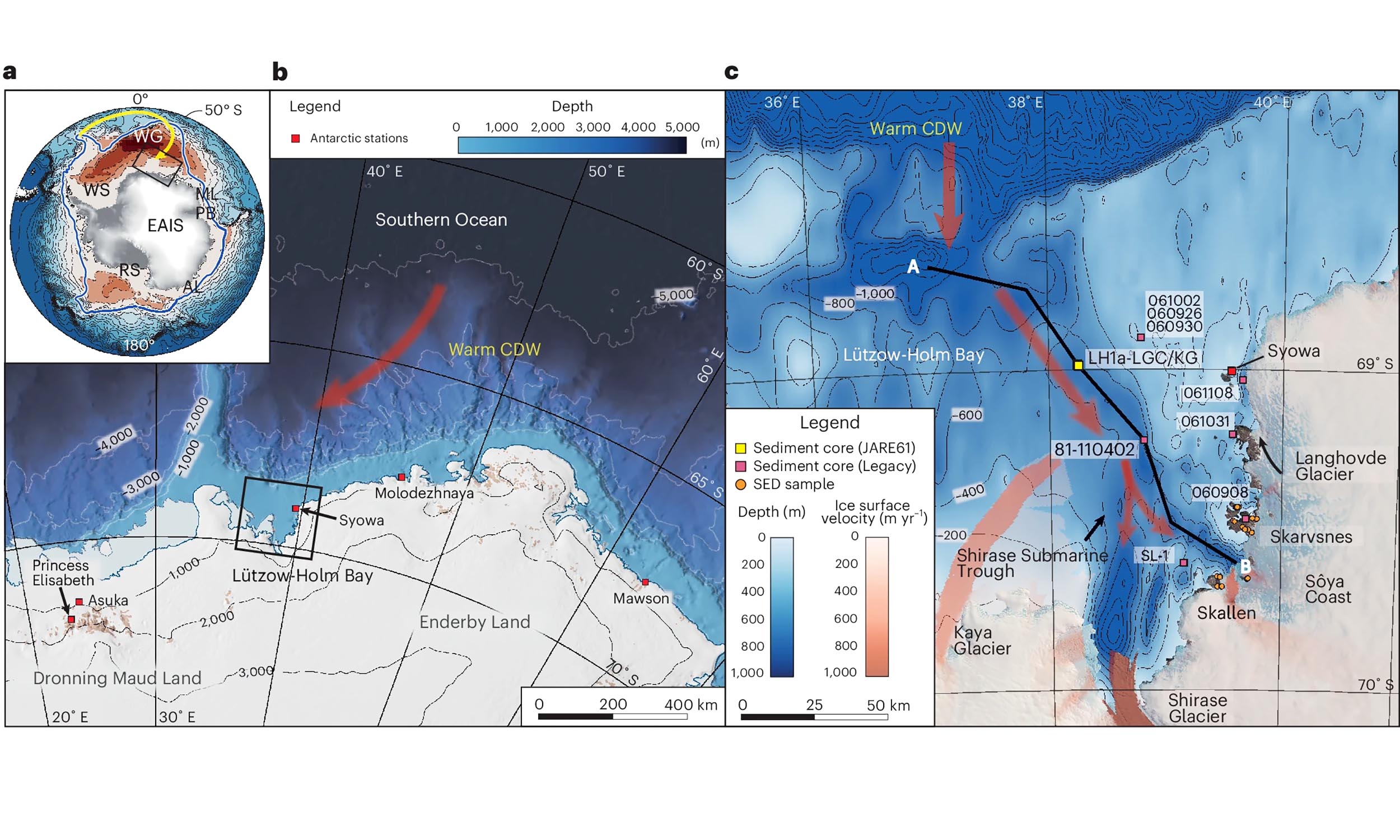
A recent study reveals that about 9,000 years ago, a section of the East Antarctic Ice Sheet collapsed rapidly due to warm ocean currents, which significantly undermined the ice shelf’s stability. Conducted by Professor Yusuke Suganuma and his team, the research utilized sediment cores from Ljutso Holm Bay to trace this collapse during the early Holocene, a warmer period following the last ice age.
Key findings include the identification of warm, salty ocean currents that surged onto the continental shelf, causing the ice shelves to disintegrate and accelerating the flow of inland ice toward the ocean. This created a “cascading positive feedback” loop, where fresh meltwater stratified the ocean, trapping warm deep water and further destabilizing the ice.
The collapse was influenced by factors like rising sea levels and the shape of the ocean floor, which allowed warm water to penetrate beneath the ice. While East Antarctica was previously considered stable, evidence shows it can thin rapidly if subjected to warm water influx, as seen in vulnerable regions like Totten and Denman.
The study warns that if East Antarctica begins to lose ice similarly to past patterns, global sea levels could rise significantly faster than current predictions, impacting coastlines worldwide. Decisions made in coming decades regarding greenhouse gas emissions will be crucial in shaping future sea level scenarios. This research highlights the urgent nature of addressing climate change to mitigate potential rapid ice loss.
Source link
